






AI's Rapid Ascent
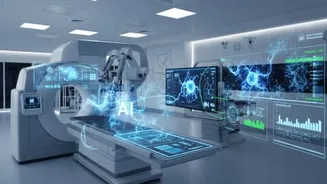
Artificial intelligence is no longer a theoretical concept in healthcare; it's actively involved in diagnosing ailments, scrutinizing medical imagery,
and managing patient inquiries on a vast scale. Studies analyzing thousands of medical questions reveal that AI systems consistently deliver responses that are not only accurate but also professionally structured. For example, a comprehensive review of over 7,000 medical queries across the US and Australia found AI responses frequently scoring between 7 and 9 out of 10 on metrics like clarity, completeness, and factual accuracy. In certain controlled environments, AI has even demonstrated superior diagnostic accuracy compared to human physicians. A notable Microsoft analysis indicated an AI system correctly diagnosed up to 85.5% of complex medical cases, significantly outperforming a group of 21 experienced doctors from the UK and US. Furthermore, this AI also required fewer tests to reach its diagnoses. During a medical AI competition in Shanghai, AI-assisted teams processed chest X-rays more rapidly than human doctors, with the technology capable of identifying dozens of conditions from a single scan. This speed is a clear advantage for AI, as it operates tirelessly, maintains performance under pressure, and can handle thousands of cases concurrently, offering a substantial benefit in overburdened healthcare systems.
AI's Current Limitations
Despite its notable strengths, AI possesses critical vulnerabilities that cannot be overlooked. A primary concern is its inability to grasp context, as demonstrated in the Shanghai competition where AI-assisted teams missed certain diagnoses that human doctors identified. Moreover, the human reports were often more comprehensible, exhibiting a warmer tone and superior overall organization. This suggests that while AI can process data with great speed, its interpretation capabilities are not always precise. The propagation of misinformation also presents a significant risk. As Dr. Rajmadhangi D. from Apollo Spectra Hospitals, Chennai, points out, AI can be 'context-blind,' potentially delivering technically correct but medically hazardous advice for a specific patient due to its inability to assess their physical, emotional, and social circumstances. Patients might struggle to discern relevant information from AI-generated narratives that can sound authoritative even when inaccurate. Research highlighted by The Conversation indicates that many studies testing AI focus on the perceived empathy of responses rather than their impact on patient outcomes—a critical distinction. A response, though technically sound, can be unsafe if it disregards warning signs, misinterprets symptoms, or fails to adapt to a patient's unique situation, potentially leading to delayed diagnoses, incorrect treatments, or patients adhering to advice that is not fully applicable to their condition. Compounding these issues, a recent Reuters report found that AI systems were susceptible to accepting false medical information up to 47% of the time when presented authoritatively, raising serious questions about AI's vulnerability to manipulation in real-world medical scenarios.
The Empathy Conundrum
Interestingly, recent research has revealed a surprising phenomenon: AI can sometimes appear more empathetic than human doctors, at least in specific scenarios. A review of numerous studies published in the British Medical Bulletin indicated that AI-generated responses were perceived as more empathetic than those crafted by healthcare professionals in a substantial majority of cases, nearly 87% of the time. However, this doesn't imply genuine machine consciousness of empathy. The basis for comparison has inherent limitations; these studies evaluated written outputs, not live interactions. AI benefited from having ample time to compose polished replies, unburdened by the need to manage tone, non-verbal cues, or emotional pressures. Nevertheless, this finding prompts a critical question: why do human doctors occasionally come across as less empathetic? User experiences shed light on AI's expanding role beyond mere information provision. Oshin, a professional based in Gurugram, frequently turns to AI for health-related queries, particularly when accessibility or personal comfort is a barrier. She notes, 'I use AI for healthcare quite often. You can’t go to a doctor for everything, and there’s often hesitation in talking about certain issues. With AI, it feels like no one is judging you on the other side, especially as an introvert.' AI also assists her in gauging the severity of an issue and determining the need for professional consultation. She recounts an instance where AI helped persuade her aunt to seek medical attention when she was initially reluctant, a decision that ultimately proved life-saving.
Why Empathy Wanes
The perceived decline in doctors' empathy isn't due to a lack of care, but rather systemic challenges that make expressing empathy difficult. The contemporary healthcare model is heavily reliant on protocols, extensive documentation, and digital record-keeping. Consequently, physicians often allocate a significant portion of their working hours to administrative tasks instead of direct patient interaction, transforming clinical practice into a process-driven system where efficiency frequently overshadows interpersonal connection. Physician burnout is another critical contributing factor. Reports indicate that a substantial percentage of doctors globally experience high levels of stress and exhaustion. When physicians are overworked, their emotional reserves diminish, making it challenging to consistently demonstrate empathy, not from a lack of willingness, but from sheer depletion of personal capacity.
Humanity's Unyielding Role
Despite the remarkable advancements in artificial intelligence, certain facets of medicine remain profoundly human and beyond the reach of machines. AI is incapable of interpreting unspoken emotions during face-to-face interactions, failing to discern hesitation, fear, or discomfort conveyed through a patient's body language. It cannot offer the tangible reassurance that a doctor might provide, such as holding a patient's hand during a painful procedure. Furthermore, AI struggles to fully comprehend cultural nuances, individual values, or complex ethical dilemmas. Medical decisions are rarely purely clinical; they often involve subjective judgment calls influenced by a patient's beliefs, preferences, and life circumstances. Critical moments in healthcare, such as navigating terminal illnesses, delivering difficult news, or supporting individuals through prolonged suffering, necessitate a human presence that transcends mere information delivery. Building trust is also fundamental to healthcare, and AI faces a significant hurdle in this regard. Patients are more inclined to adhere to medical advice when they trust the source of that information. While AI can furnish consistent data, cultivating that essential trust, especially in sensitive or complex situations, remains a challenge. Moreover, the inherent issue of bias in AI systems cannot be ignored. As these systems are trained on existing data, they may not accurately represent all population groups, potentially perpetuating inequities in healthcare.
The Collaborative Future
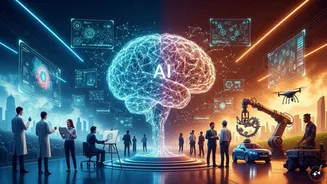
Determining whether AI or human doctors are 'better' is not a simple dichotomy; their strengths lie in different domains. AI demonstrably excels in rapidly processing vast datasets, delivering structured and precise information, enhancing operational efficiency, and aiding in diagnostics, particularly for cases involving extensive data analysis. Conversely, human doctors significantly outperform machines in areas requiring nuanced understanding, such as interpreting context and ambiguity, exercising judgment in complex scenarios, communicating with empathy and adaptability, and fostering trust and genuine human connection with patients. In practice, they are not direct adversaries but complementary forces addressing different aspects of the same problem. The optimal scenario for healthcare involves the synergy of both AI and human capabilities. The consensus among most experts is that AI is unlikely to completely supplant doctors. Instead, the future of healthcare is poised to be collaborative. AI can adeptly handle routine inquiries, support diagnostic processes, and alleviate administrative burdens, thereby liberating doctors to concentrate on their uniquely human strengths: compassionate care, complex decision-making, and providing emotional support. Ultimately, the focus may shift from replacing doctors to optimizing the healthcare system that surrounds them.