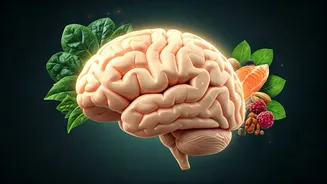







MIND Diet: A Brain Booster
Groundbreaking research published in the Journal of Neurology Neurosurgery & Psychiatry suggests a powerful dietary intervention capable of decelerating
the structural changes in the brain typically associated with aging. This dietary approach, known as the MIND diet, is a deliberate combination of the well-established Mediterranean diet and a plan specifically designed to lower blood pressure. By adhering to this regimen, individuals have demonstrated a remarkable reduction in tissue loss over time. Notably, this includes a preservation of gray matter, the critical brain region responsible for cognitive functions such as memory, learning, and decision-making. Furthermore, the diet appears to mitigate the enlargement of brain ventricles, a common indicator of brain atrophy where fluid-filled spaces expand as brain tissue shrinks. The MIND diet's established link to enhanced cognitive health is further bolstered by these structural findings, offering a promising avenue for neurodegenerative disease prevention.
Study Methodology Unveiled
To thoroughly investigate the MIND diet's impact on age-related brain alterations, a comprehensive study was conducted, analyzing data from 1647 participants. These individuals, who were middle-aged to older at the commencement of the study (averaging 60 years), were part of the Framingham Heart Study Offspring cohort. Over the course of the research, participants underwent regular health assessments approximately every 4–8 years, complemented by brain MRI scans administered at intervals of 2–6 years from 1999 onwards. Dietary intake was meticulously measured using food frequency questionnaires (FFQs) completed during health check-ups between 1991 and 2001. Crucially, each participant received at least two brain MRI scans between 1999 and 2019 and exhibited no signs of stroke or dementia at the time of their initial scan. The average adherence score to the MIND diet, out of a possible 15, was just under 7. Those in the top third for adherence were more likely to be women, possess a college education, and less likely to be current smokers or to be living with obesity. These individuals also showed a lower prevalence of health conditions known to affect brain health, such as type 2 diabetes, high blood pressure, and cardiovascular disease.
Brain Scans Reveal Impact
The longitudinal analysis of brain MRI scans over an average follow-up period of 12 years revealed expected age-related declines in total brain volume, gray matter, white matter, and hippocampal volume across all participants. Concurrently, there was an observed increase in cerebrospinal fluid, ventricular volume, and white matter hyperintensities, which are small bright spots on scans indicating tissue damage. However, a significant correlation emerged between higher adherence to the MIND diet and a slower rate of gray matter loss. Specifically, for every 3-point increase in the MIND diet score, there was a corresponding reduction in gray matter loss by approximately 0.279 cm³/year. This rate of slowing is equivalent to 20% less age-related decline and effectively translates to about 2.5 years of delayed brain aging. Similarly, each 3-point increase in the MIND diet score was associated with a slower expansion of total ventricular volume, amounting to approximately 0.071 cm³/year. This slowdown in ventricular enlargement represents about 8% less tissue loss and roughly 1 year of delayed brain aging. Among the individual food components, berries showed a strong association with slower increases in ventricular volume, while poultry consumption was linked to both reduced ventricular enlargement and slower gray matter decline. Conversely, a higher intake of sweets was linked to accelerated ventricular expansion and greater hippocampal atrophy, with fried fast foods also correlating with more significant loss of hippocampal volume.
Unexpected Findings & Synergies
Intriguingly, the study also uncovered some unexpected dietary associations. A higher intake of whole grains was linked to less favorable structural brain changes, including accelerated declines in gray matter and hippocampal volume, and faster ventricular expansion. In contrast, increased cheese consumption was paradoxically associated with slower reductions in gray matter and hippocampal volume, less ventricular enlargement, and a reduction in white matter hyperintensities. These findings remained consistent even when accounting for other factors and appeared to be more pronounced in older participants. Researchers theorize that the MIND diet might offer greater benefits to individuals at higher risk of rapid brain aging or those experiencing more variability in brain atrophy rates. Furthermore, the positive associations were amplified in individuals who were more physically active and maintained a healthy weight, suggesting that combining the MIND diet with other healthy lifestyle habits could provide synergistic benefits in reducing the risk of neurodegenerative diseases. It's important to note that this was an observational study, precluding definitive conclusions about cause and effect. Potential limitations include recall bias in food frequency questionnaires, the inability to rule out mild cognitive impairment at the study's outset, and variations in diet or genetic predispositions over time. Additionally, as most participants were White, the findings may not be universally applicable to all ethnic groups. Nevertheless, the researchers conclude that these findings strongly support the MIND diet as a beneficial eating pattern for brain health and a valuable component of strategies aimed at slowing neurodegeneration in aging populations.