



Solar Fury Erupts
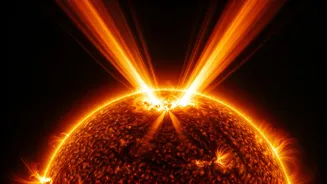
The cosmos recently delivered a stunning display of solar power, with our Sun ejecting a formidable X8.3 solar flare, marking the most potent solar outburst
recorded in 2026. This extraordinary event wasn't an isolated incident; it was part of a broader flurry of solar activity, which included at least 18 M-class flares and three other X-class flares within a 24-hour period. Solar flares are essentially colossal bursts of electromagnetic energy and radiation emanating from the Sun's surface. Scientists have established a classification system for these events, starting with A, B, and C classes, progressing to M-class, and culminating in the most energetic X-class flares. Each letter designation represents a tenfold increase in energy output compared to the preceding class, making X-class flares the absolute apex of solar explosions. An X8.3 designation places this particular flare very high on this intensity scale, signifying an exceptionally powerful release of energy that has captivated and concerned scientists alike.
Region 4366's Power
The source of this intense solar activity has been identified as a rapidly developing sunspot known as region 4366. Over the course of just a few days, this sunspot has undergone significant expansion, exhibiting characteristics of magnetic instability. It's this volatile magnetic environment within region 4366 that has fueled the series of powerful solar flares observed. The X8.3 flare, the most significant of the eruptions, reached its peak intensity at 6:57 pm EST on February 1st. The energy unleashed during this peak was immense, manifesting as strong ultraviolet and X-ray radiation. This intense radiation surged outward, impacting Earth's upper atmosphere. The consequence was immediate and noticeable: radio communications experienced significant disruption, leading to R3-level radio blackouts across various parts of the South Pacific. Specifically, shortwave radio signals traveling to and from eastern Australia and New Zealand were severely affected, as confirmed by data from the US National Oceanic and Atmospheric Administration’s Space Weather Prediction Center.
Earth's Response
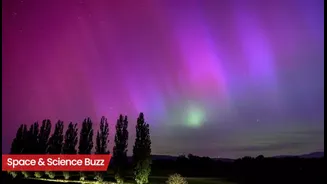
Following the powerful X8.3 solar flare, the scientific community is now intensely monitoring for potential associated phenomena, particularly coronal mass ejections (CMEs). CMEs are vast expulsions of plasma and magnetic field from the Sun's corona. While initial assessments indicate that the majority of the solar material ejected by this specific flare may not be directed towards Earth, a slight possibility of an impact remains. If a glancing blow does occur, estimated around February 5th, it could lead to a temporary increase in geomagnetic activity. This heightened geomagnetic activity might, in turn, elevate the chances of witnessing auroras, the captivating natural light displays, at higher latitudes. The active sunspot region 4366 continues to be a focal point, showing signs of sustained activity and gradually orienting itself more directly towards our planet. Forecasters are therefore anticipating further solar events originating from this dynamic region in the upcoming days, keeping space weather enthusiasts and professionals on alert.