
What are Clusters?
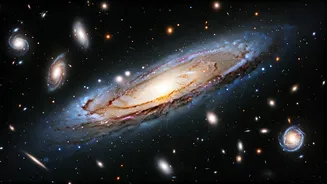
Galaxy clusters are among the largest known structures in the universe, representing gravitationally bound collections of hundreds to thousands of galaxies.
These immense groupings are not just random associations; they are held together by the immense gravitational forces exerted by their constituent galaxies and the vast amounts of dark matter believed to be present within them. The formation of these clusters is a complex process, believed to have begun shortly after the Big Bang. As the universe expanded and cooled, initial density fluctuations in the distribution of matter became more pronounced over time. Areas with slightly higher densities attracted surrounding matter due to gravity, gradually forming proto-clusters. These proto-clusters then grew and merged with other structures, ultimately evolving into the massive galaxy clusters we observe today. Understanding the formation and evolution of galaxy clusters helps cosmologists to gain insight into the distribution of matter across the universe and also to comprehend the behavior of dark matter.
Observing the Invisible
Studying galaxy clusters requires a diverse toolkit of observational techniques because they are often too far away to study directly using visible light. Astronomers frequently utilize X-ray observations to detect hot gas that fills the space between galaxies within the clusters. This intracluster medium emits X-rays, providing crucial data on the temperature, density, and distribution of the gas. Analyzing the X-ray data allows researchers to assess the clusters' mass and overall structure. Additionally, researchers use gravitational lensing, a phenomenon where the immense gravity of the cluster bends and magnifies light from background galaxies. The distortion of the background galaxy light allows astronomers to create maps of the mass distribution in the cluster, including dark matter, which does not emit or absorb light. By combining the data from these different methods, astronomers gain a comprehensive understanding of the physical properties and the underlying structure of galaxy clusters.
Hot Young Galaxies
Recent observations have unveiled fascinating details about galaxy clusters, including the discovery of surprisingly hot, young clusters. One such cluster, observed by astronomers, defies existing theoretical models because of its youthful age and the extreme temperatures of the gas it contains. These findings are reshaping our understanding of galaxy cluster formation. Further research on these young and active clusters is important to understanding how galaxies evolve within these massive environments. The study of these youthful clusters provides insight into the early universe and the processes that drove the evolution of the galaxies within these clusters, which are critical for understanding how the universe itself has evolved over billions of years.
Champagne Cluster Formation
Another area of exploration involves the study of how galaxy clusters evolve after forming. A recent discovery by NASA's Chandra X-ray Observatory shows the 'Champagne Cluster,' which is thought to be formed by a collision between massive galaxies. These collisions can trigger bursts of star formation and profoundly impact the cluster's evolution. The ongoing interaction creates dynamic and visually spectacular environments. The X-ray mapping of such clusters exposes the invisible engines powering these interactions. These observations provide a unique opportunity to study the effects of galactic collisions. It can also provide a deeper understanding of the processes by which galaxies merge and change over time. The study of such dynamic environments contributes significantly to our knowledge of the processes that shape the universe.
Distant Calm Galaxy
The exploration also covers the discovery of distant galaxy clusters, including those observed in the early universe. NASA has found a remarkably calm galaxy cluster that is the most distant one ever observed. These clusters, located billions of light-years away, represent snapshots of the universe during its early evolution. Studying them allows scientists to probe conditions that existed in the distant past. Examining the properties of these early clusters provides critical information about the formation of the first large-scale structures in the universe. Such discoveries are essential for understanding how the universe evolved. They are important in piecing together the timeline of cosmic evolution.
Ongoing Research
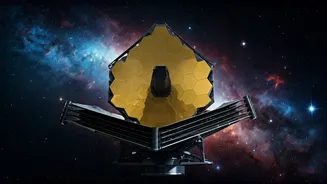
Current and future research focuses on refining existing models and developing new techniques for studying galaxy clusters. Advanced telescopes and observatories, such as the James Webb Space Telescope (JWST) and the upcoming generation of space-based instruments, will provide more detailed and comprehensive data. Astronomers are also working on complex simulations and modeling to better understand the physical processes within galaxy clusters. Combining observational data with sophisticated computer simulations will enable a deeper comprehension of these complex structures and their role in the overall cosmic evolution. This continued research effort promises to unlock even more secrets about the universe's largest and most mysterious structures.