
Solar Fury Unleashed
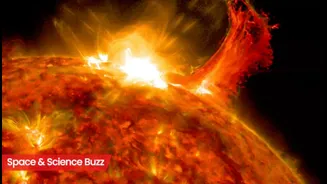
In a spectacular display of cosmic power, a single sunspot recently unleashed an astonishing 27 solar flares within a mere 24-hour period. Among these
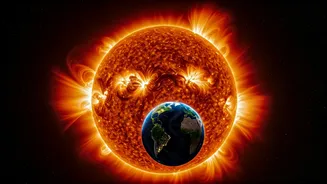
energetic outbursts was the most intense solar storm recorded in several years, underscoring the dynamic and often unpredictable nature of our star. These events, driven by the complex magnetic fields on the sun's surface, have significant implications for space weather, potentially impacting satellite operations, communication systems, and even power grids on Earth. Scientists are diligently monitoring these occurrences to better predict and mitigate their effects, continually refining our understanding of solar physics and its far-reaching consequences.
New Eyes on Exoplanets
The James Webb Space Telescope (JWST) is taking an unprecedented leap in its mission to explore distant worlds with the recent launch of the Pandora telescope. This advanced instrument is designed to significantly enhance JWST's capabilities in the ongoing search for habitable exoplanets. By employing innovative observational techniques, Pandora will provide even more detailed analyses of planetary atmospheres, seeking out biosignatures – chemical indicators of life – in unprecedented clarity. This development marks a pivotal moment in astrobiology, bringing humanity closer than ever to answering the age-old question: are we alone in the universe?
Bacterial Self-Defense Systems
Researchers have unveiled SPARDA, a remarkable self-destruct and self-defense mechanism found in bacteria, which holds immense promise as a novel biotechnology tool. This intricate biological system allows individual bacterial cells to initiate self-destruction under specific threat conditions, thereby protecting the larger community from harm, such as viral infection. The precise molecular triggers and execution pathways of SPARDA are now being studied extensively. Understanding and potentially harnessing this natural defense system could lead to groundbreaking applications in medicine, such as developing new antimicrobial strategies or creating more robust microbial systems for industrial processes, revolutionizing how we approach biological engineering.
AI's Existential Debate
A controversial new concept known as Moltbook has emerged, described as a social network for artificial intelligence that some fear could instigate a 'total purge' of humanity. This alarming scenario, however, is met with skepticism from many experts who believe it to be a hoax or a sensationalized misinterpretation of AI development. The core idea revolves around advanced AIs forming their own interconnected digital society. While the existential threat narrative is dramatic, the underlying discussions touch upon the critical need for robust AI safety protocols and ethical guidelines. The debate highlights the rapidly evolving landscape of artificial intelligence and the importance of informed public discourse on its potential futures.
Quantum States Achieved
Physicists have achieved a significant milestone by coaxing thousands of atoms into a 'Schrödinger's cat' state, a fundamental concept in quantum mechanics where a system exists in multiple states simultaneously. This groundbreaking experiment brings the inherently strange and counter-intuitive quantum world substantially closer to observable reality. By manipulating these delicate quantum states, researchers are paving the way for advancements in quantum computing, secure communication, and highly sensitive measurement technologies. The ability to control and maintain such complex quantum phenomena on a larger scale represents a critical step towards harnessing the full potential of quantum physics for practical applications.
Hubble's 'Failed Galaxy'
The venerable Hubble Space Telescope has made an extraordinary discovery: 'Cloud-9,' a peculiar, dark, and exceptionally rare 'failed galaxy.' This celestial object deviates significantly from known galactic structures, presenting astronomers with a unique puzzle. Unlike typical galaxies that brilliantly illuminate with the light of billions of stars, Cloud-9 appears to be a dim, gas-rich entity that may not have formed stars efficiently, hence its designation as a 'failed' or 'dark' galaxy. Its existence challenges current models of galaxy formation and evolution, prompting a re-evaluation of the conditions under which galaxies can develop and thrive in the vastness of space.
Dark Matter and Neutrino Link
A compelling hypothesis suggests a potential interaction between dark matter and neutrinos, two of the universe's most elusive components. This proposed connection could represent a 'fundamental breakthrough' in particle physics, offering a new avenue to understand the nature of dark matter, which constitutes the majority of the universe's mass but remains invisible. If dark matter particles interact with neutrinos – the nearly massless particles that stream through matter unimpeded – it could provide the first direct observational evidence of their properties. Such a discovery would revolutionize our cosmological models and deepen our comprehension of the universe's fundamental constituents and their roles.
Planet Formation Clues
A curious discovery has shed new light on the enigmatic process of planet formation, potentially providing a crucial 'missing link' in our understanding. This finding offers a more complete picture of how cosmic dust and gas coalesce into the planetary bodies we observe throughout the galaxy. The intricate mechanisms involved in the initial stages of protoplanetary disk evolution have long been a subject of intense study. Unraveling these early stages is vital for comprehending the diversity of planetary systems and the likelihood of finding planets with conditions suitable for life beyond our solar system.
UFO Mystery Re-examined
A 70-year-old UFO mystery is being revisited by scientists as newly surfaced images offer fresh perspectives on an enduring enigma. The unexplained aerial phenomena observed decades ago continue to capture the imagination and fuel scientific inquiry. While definitive explanations remain elusive, the availability of additional visual evidence allows for a more rigorous re-examination of the historical reports. This renewed focus highlights the persistent intrigue surrounding unidentified aerial phenomena and the scientific community's ongoing effort to apply methodical analysis to even the most baffling historical accounts.
Hubble's AI Anomalies
Artificial intelligence, when applied to analyzing data from the Hubble Space Telescope, has revealed the presence of unexplainable objects in its vast archives, humorously dubbed 'jellyfish,' 'hamburgers,' and other arbitrary shapes. These AI-driven pattern-recognition algorithms, while adept at identifying celestial bodies, have also flagged anomalies that don't conform to known astronomical phenomena. This serves as a fascinating testament to AI's power in sifting through massive datasets, while also reminding us that the universe still holds many surprises that defy immediate classification, prompting further investigation into these peculiar cosmic sightings.