
Mind Control's Future
Mind control, a staple of sci-fi, often involves the manipulation of thoughts or actions. While direct mind control as depicted in fiction remains largely
in the realm of imagination, brain-computer interfaces (BCIs) are a burgeoning area. These technologies enable a direct link between the brain and external devices. BCIs have already shown potential in controlling prosthetics and, more subtly, influencing behavior through targeted brain stimulation. However, the ethical implications are huge, ranging from privacy concerns to misuse by governmental entities. This section highlights these technologies and the need for ethical guidelines as BCIs continue to advance.
Robots & AI
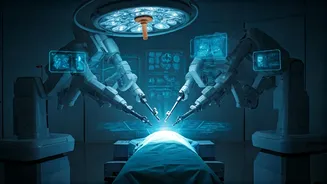
Robots and artificial intelligence are essential components of many sci-fi universes. The reality, however, is a complex mix. AI is improving rapidly, with applications in various industries, from healthcare to finance. Robots are performing industrial tasks and assisting in dangerous environments. The biggest challenge lies in creating truly autonomous robots capable of complex decision-making and human-like intelligence. The current AI models excel in narrow tasks but struggle with general intelligence and adaptability. The potential impact of artificial general intelligence (AGI) is a significant aspect to look at. Ethical concerns around job displacement and potential misuse of AI are essential considerations.
Space Travel Advances
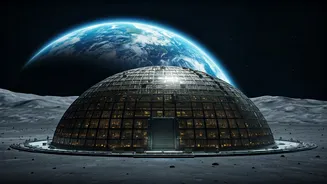
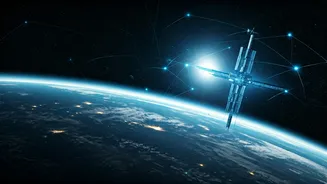
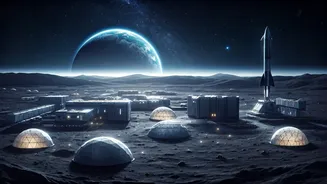
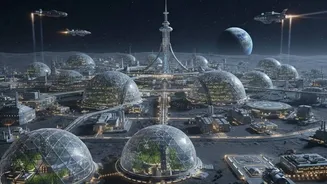
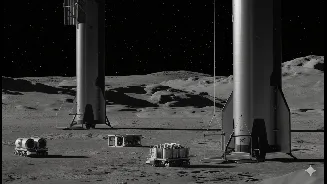
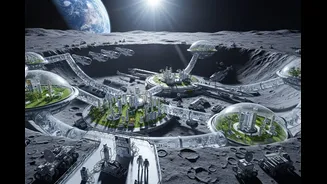
Space travel, once confined to science fiction, is becoming increasingly accessible. The development of reusable rockets, such as those by SpaceX, has drastically reduced the costs of space travel. The exploration of Mars is a priority for many space agencies. However, interstellar travel remains a substantial challenge, given the vast distances and current limitations in propulsion technology. The discovery of exoplanets has increased the possibilities of finding life beyond Earth. However, the hurdles of long-duration space travel, including radiation exposure and psychological effects, are vital. International collaborations are vital for future space exploration initiatives.
Virtual Reality Impact
Virtual reality (VR) and augmented reality (AR) have evolved from futuristic concepts to commercially available technologies. VR immerses users in simulated environments, whereas AR overlays digital information on the real world. Gaming, entertainment, and training are a few of VR's uses. AR is finding applications in various fields, including healthcare, manufacturing, and education. Despite the progress, VR and AR still face challenges, such as the need for more advanced hardware and content creation. The immersive nature of VR can create ethical and safety challenges. The interaction between humans and technology is developing, creating new types of communication and collaboration.
Time Travel Possibilities
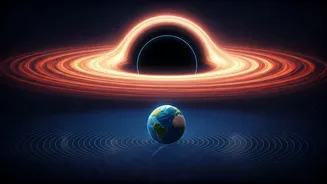
Time travel remains one of the most intriguing sci-fi tropes, but its feasibility is highly debated. From a physics perspective, the concept of time travel is not completely ruled out. Einstein's theory of relativity suggests that time dilation can occur, which means the perception of time can vary based on an observer's speed. Wormholes, hypothetical tunnels through spacetime, are another aspect often associated with time travel, although their existence is unproven. The paradoxes associated with time travel, like the grandfather paradox, raise enormous conceptual challenges. Despite ongoing exploration in theoretical physics, time travel is likely to remain in the realm of fiction.
Cybernetics And Enhancement
Cybernetics, the integration of technology with the human body, is another field pushing beyond the boundaries of fiction. Medical technology has made massive advancements in the field, with devices like pacemakers and cochlear implants being commonplace. The development of advanced prosthetics and bionic limbs has given new hope to people with disabilities. The prospect of enhancing human capabilities through cybernetic implants also brings up ethical questions. Issues such as body modification and the potential for a social divide based on access to such enhancements need serious consideration.
Teleportation Realism
Teleportation, the instantaneous transfer of matter from one location to another, is a staple in sci-fi. However, there is no evidence of such technology in reality. Quantum teleportation, a concept in physics, involves the transfer of quantum information rather than physical matter. This does not allow for instantaneous movement of objects or people. Despite the scientific challenges, research in quantum computing could bring advancements that could indirectly affect the transfer of information. However, teleportation of physical objects remains in the hypothetical zone.
Faster-Than-Light Travel?
Faster-than-light (FTL) travel is essential for interstellar travel in much of science fiction. The laws of physics, especially the speed of light, pose a huge challenge to this concept. Einstein's theory of relativity says that nothing with mass can travel at or beyond the speed of light. Nevertheless, scientists continue to explore concepts like warp drives, which bend spacetime to effectively reduce travel distances. The energy requirements for FTL travel are still extremely high, and the physics are still theoretical. Whether FTL travel becomes a reality remains an open question, and many believe it will stay in the realm of fiction.
Climate Change Solutions
Climate change, a frequent theme in sci-fi, is becoming a pressing reality. Scientific predictions show that global warming could cause many threats. Scientists and engineers are developing innovative solutions, like sustainable energy sources (solar, wind), carbon capture technologies, and geoengineering strategies. The potential for these ideas to have a real impact is high, but the implementation faces significant political, economic, and technological obstacles. The urgency of the climate crisis means that sci-fi's emphasis on climate change solutions is becoming increasingly relevant.
Post-Apocalyptic Scenarios
Post-apocalyptic scenarios, so common in sci-fi, are a reflection of human fears about survival after large-scale disasters. While a global apocalypse seems distant, the threats of pandemics, nuclear war, or environmental collapse make post-apocalyptic settings relevant. Human history shows a capacity for resilience and adaptation. Preparedness and community cooperation will play a huge role in the ability to survive in times of disaster. The possibility of such occurrences underscores the significance of sustainable practices and responsible global citizenship.