




Initial Setup and Prep
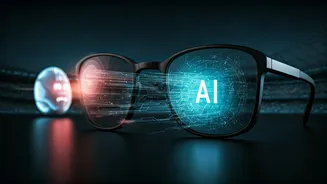
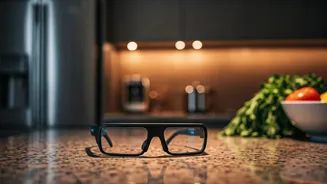
The first step was to get everything ready. The author began by setting up the smart glasses. This involved ensuring they were charged and paired with
the necessary devices. This initial phase also included familiarizing oneself with the controls and the interface of the glasses. Once the technical aspects were taken care of, the author moved on to the actual cooking task, preparing all ingredients and tools needed for the recipe.
Kitchen Navigation Struggles
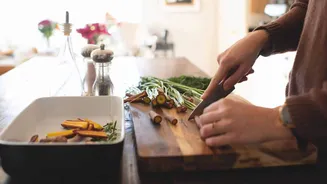
Navigating the kitchen environment proved to be a hurdle. Even simple tasks became complicated because the author found it challenging to quickly access the information displayed by the glasses while dealing with hot surfaces, sharp objects, and multiple ingredients. Trying to read a recipe or get cooking instructions while wearing the glasses added extra steps to the process. The real world and the virtual world often clashed, making the whole cooking experience far from seamless, creating a situation that was both quirky and less than ideal.
Recipe and Ingredient Issues
Another challenge arose when trying to find and identify ingredients. Looking up recipes and trying to view them through the glasses wasn't as straightforward as expected. The author had to constantly adjust their focus and the display settings on the glasses to properly see and understand the recipe instructions. The glasses' interface, while potentially useful, could at times feel distracting rather than helpful, taking away from the essential cooking tasks. Some features were difficult to operate, and the overall reliability of the system wasn't quite up to the mark.
Testing Recipe Against Source
Comparing a new recipe with an online source turned out to be less helpful. The author tested the accuracy of online recipes, but with limited success. The glasses, even with their advanced features, struggled to offer real-time assistance that enhanced the cooking experience. The process highlighted the current limitations of smart glasses in providing efficient and reliable support for complex tasks like following detailed recipes. Therefore, the experiment with checking the recipe proved unsuccessful for the author.
Final Thoughts and Conclusion
In conclusion, cooking with smart glasses, while novel, revealed several practical challenges. The author found the overall process to be more complex than traditional cooking methods. Although technology continues to advance, the experience revealed that there's still work to be done to make smart glasses a genuinely helpful tool in the kitchen. For now, the author found that traditional methods remained more reliable and user-friendly for preparing a meal. The experiment offered insights into the current limitations and the potential future of smart glasses.