



Castor & Coconut Power
Coconut oil is widely considered the ideal partner for castor oil, enhancing its efficacy. Its lighter consistency allows the thicker castor oil to spread
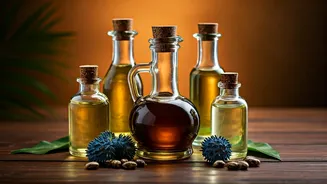
more evenly through the hair, facilitating better penetration. This synergy is key because coconut oil can actually enter the hair shaft, unlike many other oils that merely coat the exterior. This deep penetration helps to minimize protein loss from the strands, leading to stronger hair that is less prone to breakage. It’s important to understand that hair typically grows at a consistent biological rate; visible growth is often a result of retaining more hair that doesn't snap off. By reducing breakage, your hair appears to grow longer and fuller. A simple and effective ratio is mixing one part castor oil with two parts coconut oil. This blend feels smoother, is easier to wash out, and is particularly beneficial for hair that is dry, coarse, or has been damaged by heat styling.
Almond Oil Softness
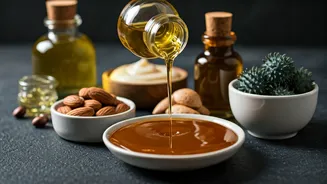
Almond oil, often overlooked, is a beloved ingredient among beauty aficionados for its remarkable benefits. It's lightweight, abundant in vitamin E, and exceptionally gentle on the scalp, making it a time-honored ingredient in traditional beauty practices across various cultures for centuries, used to foster hair nourishment and refine its texture. When combined with the richness of castor oil, almond oil effectively softens the blend, transforming it from a heavy mask into a silky, manageable treatment. This combination actively contributes to reducing hair breakage, imparts a beautiful softness and shine, and significantly improves the manageability of hair. It's a particularly effective solution for hair that tends to tangle easily or appears dull. For those new to oil blending, this particular mixture is one of the most straightforward and forgiving options to start with.
Rosemary's Growth Boost
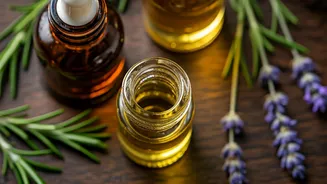
Rosemary oil stands out due to scientific evidence supporting its potential to improve scalp conditions conducive to hair growth. Clinical studies have indicated that hair oil blends containing rosemary can lead to increased hair density, enhanced thickness, and a reduction in hair fall over time. However, rosemary oil is quite potent and should never be used in its pure form. The correct approach is to add just a few drops of rosemary essential oil to a castor oil mixture. The castor oil acts as a moisturizing and protective base, while the rosemary oil stimulates blood circulation around the hair follicles, a crucial factor for healthy growth. This balanced combination creates a synergistic treatment. Many beauty experts refer to this blend as the closest natural alternative to professional scalp therapy. Remember, a little goes a long way; excessive use does not yield better results and can be counterproductive.
The Art of Blending
The practice of oiling hair offers a calming ritual, encouraging a moment of self-care and mindfulness. It's perhaps this inherent therapeutic quality that ensures these traditional methods endure despite the constant influx of new, often expensive, hair care products. Castor oil's true strength lies not in being a standalone miracle solution, but in its role as a powerful, nourishing base. When artfully combined with complementary oils, it becomes an integral part of a hair care routine that gradually, naturally, and sustainably fortifies the hair. Therefore, the next time you use castor oil, resist the urge to apply it undiluted. Instead, blend it, massage it in, and be consistent with your application. While dramatic transformations won't occur overnight, consistent use over several weeks will likely reveal significant improvements: stronger strands, a calmer scalp, and hair that feels undeniably healthier.
Correct Application Ratios
A common pitfall when using castor oil is applying too much of it. Due to its dense nature, experts universally advise that castor oil should constitute the smaller portion of any oil blend. An exceptionally effective and simple ratio to follow is one tablespoon of castor oil combined with two tablespoons of a carrier oil. Suitable carrier oils include coconut oil, almond oil, jojoba oil, or argan oil. For an added boost, you can incorporate 3 to 5 drops of rosemary oil into this mixture. Prior to application, gently warm the entire blend by rubbing it between your palms. This warming process not only ensures the oil spreads more effectively but also enhances the overall relaxation experience during the scalp massage.
Massage & Scalp Health
The true efficacy of hair oiling extends beyond simply coating the hair strands; the most significant benefits are realized during the scalp massage. Employing your fingertips—avoiding nails—gently massage the scalp for approximately five minutes. This action is vital for stimulating blood circulation to the scalp, which in turn facilitates the even distribution of the nourishing oils. Allow the oil to remain on your hair and scalp for a minimum of 30 minutes. For those whose scalps tolerate oil well, leaving it overnight is also an excellent option. Subsequently, shampoo your hair gently. It may require two washes to thoroughly remove heavier oil formulations. Aim for two to three oiling sessions per week; exceeding this frequency can lead to product buildup rather than yielding additional benefits.
Understanding Hair Growth
It's crucial to address a common misconception: no single oil possesses the ability to dramatically accelerate the rate of hair growth. Experts consistently affirm that castor oil does not scientifically speed up hair growth velocity. Instead, its benefits lie in its capacity to significantly improve scalp hydration, minimize hair breakage, and fortify existing strands. These effects collectively contribute to hair appearing fuller and longer over time, which is a substantial gain in itself. The reality is that most perceived 'slow growth' is actually a result of hair damage and breakage, not a deficiency in growth speed. Achieving visible hair growth is fundamentally about cultivating a healthy scalp environment coupled with maintaining strong, intact hair strands.
Argan Oil's Shine
Often hailed as 'liquid gold,' argan oil truly lives up to its luminous reputation. This precious oil is rich in potent antioxidants and essential fatty acids that work synergistically to smooth the hair cuticle, imparting an instant glossy and healthier appearance to the hair. While castor oil provides deep moisturization, argan oil contributes softness and improves hair's movement and flow. Together, they create a sophisticated, salon-quality finish without the need for professional intervention. This blend is particularly well-suited for hair that is prone to frizz, has been colored or chemically treated, or for individuals who dislike the feeling of heavy oiling routines. The result is hair that feels thoroughly nourished yet remains light and airy, with a significantly more pleasant scent than pure castor oil.
Jojoba Oil Balance
Intriguingly, jojoba oil is not a true oil but rather a liquid wax. Its chemical structure closely mimics the natural sebum produced by the scalp, allowing it to be readily recognized and absorbed by the skin. When incorporated into a castor oil blend, jojoba oil plays a vital role in preventing product buildup and maintaining a balanced scalp environment—preventing it from becoming excessively oily or uncomfortably dry. This scalp balance is more critical than many realize, as healthy hair growth originates from a robust scalp. When hair follicles are obstructed or irritated, hair growth is impeded, regardless of the topical treatments applied. Jojoba oil aids in soothing itchy scalps, regulating excess oil production, and enhancing overall scalp comfort. This blend is especially beneficial for those who experience oily roots alongside dry ends.