






Imagination Drives Innovation
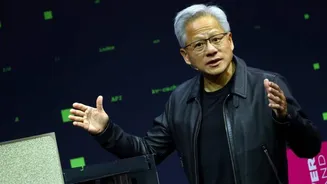
Nvidia CEO Jensen Huang has weighed in on the ongoing discussion surrounding layoffs that are increasingly attributed to the advancements in artificial
intelligence. Huang posits a rather unconventional view: the primary reason behind companies downsizing or failing to leverage new technologies effectively isn't the technology itself, but a deficiency in leadership's creative thinking. He articulates that when executives find themselves short on innovative ideas, they often resort to measures like workforce reductions, as they have 'nothing else to do.' This perspective challenges the prevailing narrative that AI is an inherent job destroyer, instead shifting the focus to the strategic and imaginative capabilities of those at the helm of organizations. Huang implies that companies truly equipped with foresight and ingenuity will naturally find ways to harness AI and other advancements to achieve greater productivity and efficiency, often by doing 'more with less.' This idea champions a proactive approach to technological integration, emphasizing human ingenuity over a reactive stance on automation.
AI and Job Security
Contrary to the widespread apprehension that artificial intelligence will inevitably lead to mass job displacement, Nvidia's chief executive, Jensen Huang, holds a fundamentally different outlook. Huang explicitly opposes the notion that AI's rise spells doom for employment opportunities. His stance suggests that AI should be viewed as a tool for augmentation and enhancement, rather than outright replacement. The key, according to Huang, lies in how businesses choose to implement and integrate these powerful AI technologies. Companies that are 'out of imagination,' as he puts it, will struggle to adapt and may indeed see job cuts as a consequence of their inability to innovate. However, for those with a visionary approach, AI presents a pathway to increased operational capacity and a more streamlined workflow, allowing them to accomplish more with fewer resources. This re frames the conversation from one of fear and inevitability to one of opportunity and strategic implementation.