


Solar Maximum Impact
Solar activity peaks in cycles, and 2026 is projected to be a period of significant solar maximum. This heightened activity, fueled by the sun's internal
processes, releases more solar flares and coronal mass ejections (CMEs). These events send charged particles towards Earth. When these particles interact with the Earth's magnetic field and atmosphere, they create auroras. The intensity of these solar storms directly correlates with the brightness and frequency of auroral displays. The expected solar maximum in 2026 makes it a prime time for these celestial fireworks.
Solar Storms Explained
Solar storms are a natural consequence of the sun's activity, which happens during solar flares and CMEs. Solar flares are sudden bursts of energy, while CMEs involve the ejection of massive amounts of plasma and magnetic field from the sun's corona. The particles from these events travel through space and, if directed towards Earth, can cause geomagnetic storms. These storms interact with the Earth's magnetosphere, which is the area surrounding Earth that protects the planet from solar wind. This interaction is the genesis of auroras. The stronger the solar storm, the further south the auroras become visible.
Auroral Displays Unveiled
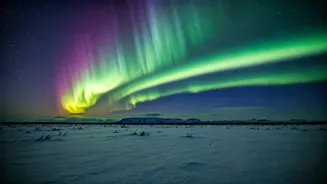
Auroras, often referred to as the Northern Lights (Aurora Borealis) and Southern Lights (Aurora Australis), present themselves as dancing curtains of light in the night sky. The color of the aurora depends on the type of gas atoms that are excited and the altitude at which the interaction occurs. Oxygen typically emits green and red light, while nitrogen produces blue and purple hues. The intensity and forms of the auroras vary depending on the energy of the incoming solar particles and the Earth's magnetic field conditions. The higher the solar activity, the more likely it is that you will see a vibrant display.
Viewing Conditions Analysis
Several conditions influence the visibility of the Northern Lights. Dark skies are essential, so viewing away from city lights is crucial. Clear weather is also important because clouds obscure the view. Furthermore, the timing of the solar activity is significant. Solar storms that hit during nighttime hours provide the best viewing opportunities. The Kp index is another important factor; it indicates the level of geomagnetic activity. Higher Kp indices suggest a higher likelihood of seeing auroras. Keeping an eye on weather forecasts and aurora forecasts can improve your chances of witnessing this natural wonder.
Maximizing Your Chances
To boost your chances of witnessing the Northern Lights in 2026, it is helpful to monitor the Kp index. This provides real-time information on geomagnetic activity, which directly relates to auroral displays. Find locations that have minimal light pollution, such as remote areas away from cities. Consider the timing; the peak viewing season usually corresponds with the equinoxes. These times give optimal darkness and, frequently, heightened solar activity. Also, subscribe to aurora alerts from various forecasting websites and apps to get real-time warnings.