






Celestial Spectacles Ahead
The next couple of years are set to be extraordinary for astronomy enthusiasts, offering multiple opportunities to witness breathtaking celestial events.
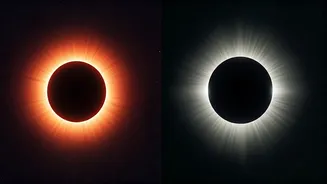
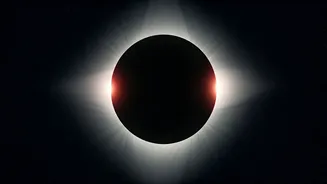
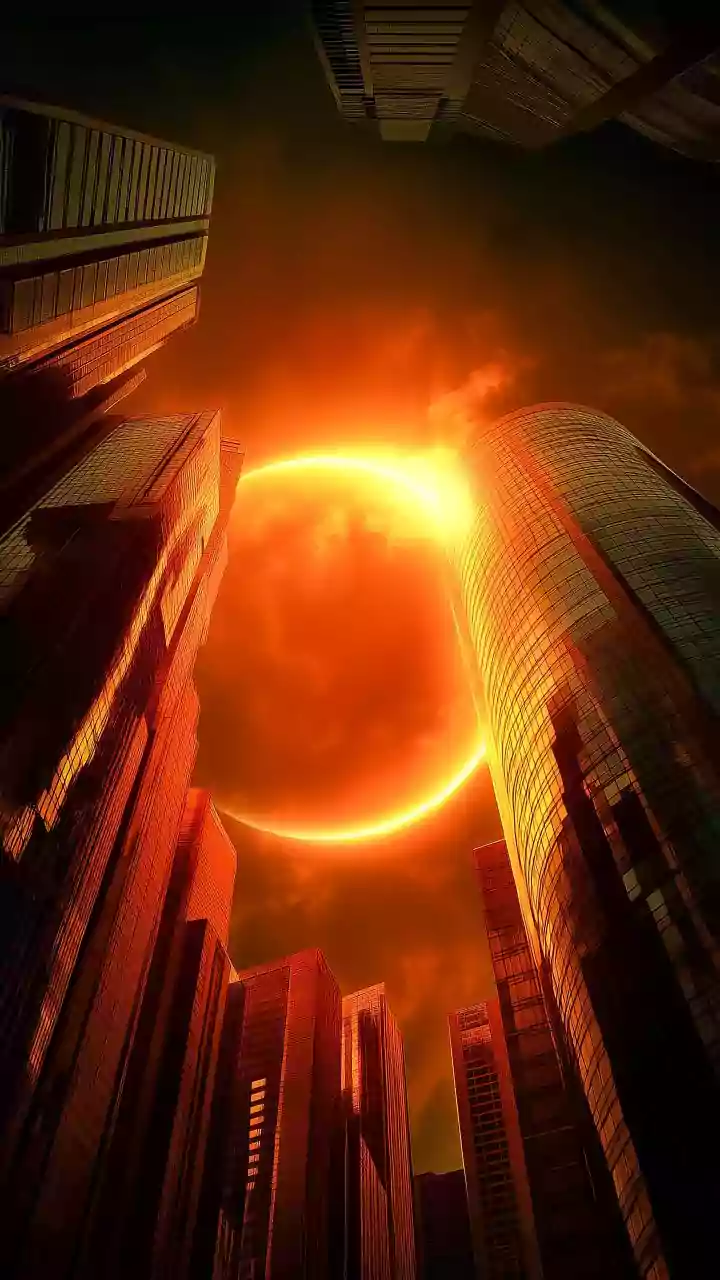
Among these, two total solar eclipses stand out as particularly significant. The first is scheduled to occur on February 17, offering a unique 'ring of fire' view over Antarctica, a rare treat for those in the southernmost regions. Following this, the much-anticipated 'eclipse of the century' will take place on April 8, 2024. This event is expected to be a monumental occasion, visible across a significant portion of North America, promising a dramatic display as the moon completely obscures the sun. The path of totality for this grand event will stretch from Mexico, through the United States, and into Canada, making it accessible to millions. Observers should prepare for distinct visual phenomena, including a change in the appearance of colors during the eclipse due to the altered lighting conditions. This extraordinary alignment promises a memorable experience for all who have the chance to witness it directly, reminding us of the vast and dynamic nature of our solar system.
The 'Eclipse of the Century'
The April 8, 2024, total solar eclipse has been widely dubbed the 'eclipse of the century' for very good reasons. Its path of totality is predicted to cross a densely populated area, offering a prime viewing experience for a substantial portion of North America. This alignment means that millions of people in Mexico, the United States, and Canada will be able to witness the moon perfectly cover the sun, revealing the sun's ethereal corona. Unlike partial or annular eclipses, a total solar eclipse offers a profound and immersive spectacle, where daylight briefly transforms into twilight, and the sun's outer atmosphere becomes visible. Scientific studies and observations leading up to this event will likely focus on the sun's corona, its magnetic fields, and solar activity, offering valuable data for researchers. The visual experience itself is anticipated to be profound, with some describing the changes in perceived colors during the eclipse due to the unique lighting. The sheer scale of accessibility and the dramatic nature of the event contribute to its 'century' status, marking it as a once-in-a-generation astronomical highlight.
Beyond the Eclipses
While the upcoming total solar eclipses are certainly highlights, the cosmos offers a continuous stream of fascinating phenomena. The sun itself, a dynamic star, frequently produces solar flares and Coronal Mass Ejections (CMEs), as evidenced by recent events linked to a massive sunspot that unleashed nearly 1,000 flares and a powerful X-rated explosion. These solar storms can have tangible effects on Earth, occasionally triggering stunning auroras visible even at lower latitudes, and are a constant subject of study for space weather forecasting. Beyond our sun, deep space missions and telescopes like the James Webb and Chandra are pushing the boundaries of our understanding, revealing previously unseen objects and phenomena, such as a 'runaway' black hole and a 'monster object' that defies current astrophysical theories. Comets also occasionally grace our skies; the 'Great Comet of 2026' is potentially on the horizon, with some astronomers speculating it might become visible to the naked eye. Even our own moon is a stage for cosmic events, with the possibility of asteroid impacts creating visible flashes. These diverse celestial occurrences underscore the universe's ever-present grandeur and the ongoing quest to unravel its mysteries.