





Avocado's Ancient Roots
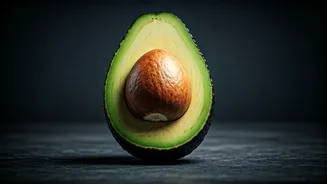
The avocado, botanically known as Persea americana, boasts a history stretching back approximately 10,000 years to its origins in Coaxcatlan, Puebla, Mexico.
Long before its current status as a global culinary trend and a symbol of modern brunch culture, this fruit played a significant role in the lives of ancient Mesoamerican and northern South American peoples. It wasn't merely a source of sustenance but also held deep cultural and agricultural importance. The Spanish conquistadors, upon encountering the fruit, were equally captivated, documenting their admiration with a fervor that mirrors today's enthusiasm for guacamole. The true commercial potential of the avocado began to be realized around 1900, with the advent of horticultural techniques like grafting, which allowed for the cultivation of superior seedlings and transformed avocado into a viable agricultural business. This innovation facilitated its expansion into regions with suitable climates, eventually reaching India. Today, the avocado stands as the fourth most significant tropical fruit worldwide, with Mexico leading production, contributing over one million metric tons annually to the global market.
The Marvel of Avocado Flowers
Delving into the biological intricacies of the avocado reveals a captivating process centered around its flowers. Each avocado blossom is adorned with six structures called tepals, which are a fusion of petal-like and sepal-like characteristics, making it difficult to distinguish between the two. What makes avocado flowers particularly remarkable is their unique opening and closing cycle, which occurs twice daily. These flowers are bisexual, possessing both male (stamens) and female (pistil) reproductive organs, but they function sequentially rather than simultaneously. On their first opening, the flowers act exclusively as female, receptive to pollen. The following day, they reopen, this time in their male phase, releasing pollen. During the female stage, the stamens are folded downwards against the tepals, whereas in the male phase, they stand erect to shed pollen. This elaborate flowering behaviour is known botanically as protogynous dichogamy. To facilitate cross-pollination, avocado trees are categorized into two flowering types: Group A and Group B. Group A flowers exhibit female characteristics in the morning and male in the afternoon, while Group B flowers are female in the afternoon and male in the morning. This staggered timing ensures effective pollen transfer between trees. Environmental factors, particularly temperature, also influence this process. In warmer conditions, there might be a brief overlap of one to three hours where both male and female flowers are open, providing an opportunity for insects like bees, drawn by nectar, to act as pollinators. Conversely, cooler temperatures can alter or even reverse the timing, highlighting the avocado's sensitive adaptation to its environment.
Ancient Seed Dispersal
Seeds are nature's ingenious method for plant propagation, with dispersal typically achieved through wind, water, or animal activity. The avocado's substantial pit, often pondered for its size and whether it would be swallowed whole, presents an intriguing question about its dispersal before human intervention. It is theorized that enormous herbivores, such as giant ground sloths, served as the avocado's primary couriers. These prehistoric creatures would consume avocado seeds whole, with the seeds then traveling through their digestive systems before being deposited far from the parent tree. These ancient sloth relatives, reminiscent of modern sloths but on a much grander scale, were among the largest bipedal mammals ever to exist. Over 100 species roamed the Americas, with the colossal Megatherium americanum reaching 3.5 meters (12 feet) in height and weighing up to 4 tonnes, while smaller species like the Cuban Megalocnus weighed around 90 kg. The giant ground sloths of North America became extinct approximately 11,000 years ago, followed by their South American counterparts about 10,200 years ago. Following this extinction event, humans assumed the role of the primary dispersers of avocado seeds, continuing the fruit's journey across landscapes.
Indian Avocado Relatives
Interestingly, India is home to wild relatives of the avocado, found nestled within the Eastern Himalayas. These plants belong to the less commonly known genus Machilus, specifically the species Machilus edulis. The fruit of this plant is a familiar sight and food source for local communities in Sikkim and Darjeeling. These indigenous fruits are roughly the size of a plum, are round in form, and contain a seed that is proportionally larger than the pulp, bearing a resemblance to the wild Persea americana before its domestication. Another related species, Phoebe bootanica, is also considered a wild relative of the avocado and can be found growing in parts of Assam, Arunachal Pradesh, and Nagaland. The fruits of Phoebe bootanica are similarly consumed traditionally by the indigenous populations in these regions. The presence of these close relatives in India, so far from the avocado's native Central American origin, raises fascinating questions about plant migration and evolutionary history. It highlights how plants have traversed continents over millions of years, a testament to the dynamic nature of life and dispersal, long before the simple journey from farm to toast that we associate with avocados today.