




The Sun's Magnetic Mystery
For years, scientists have observed the Sun's dramatic 11-year magnetic cycle, characterized by the appearance and migration of sunspots towards the equator,
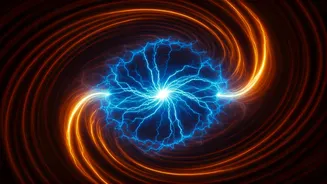
forming a distinct butterfly pattern. These sunspots, visible markers of intense magnetic activity, are also the source of solar eruptions that influence space weather. While this surface behavior has been extensively studied, the actual origin of this magnetic field generation, the solar dynamo, remained elusive, hidden deep within the star. Understanding this internal mechanism is crucial for predicting solar activity and its potential impacts on Earth and technology. This investigation aimed to lift the veil on these hidden processes, finally providing observational evidence for the location of the Sun's magnetic heart.
Sounding the Solar Depths
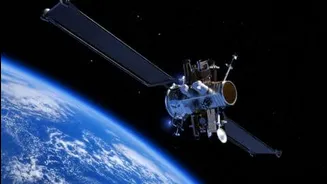
To probe the Sun's interior, researchers ingeniously employed helioseismology, a technique that uses sound waves generated by the Sun's internal plasma movements. They meticulously compiled nearly 30 years of data from multiple instruments, including NASA's Solar and Heliospheric Observatory (SOHO) and the Solar Dynamics Observatory (SDO), as well as the ground-based Global Oscillation Network Group (GONG). These instruments have been continuously recording internal sound waves every 45 to 60 seconds since the mid-1990s. By analyzing billions of these measurements, the team constructed an unprecedentedly long and detailed record of the Sun's internal vibrations. This extensive dataset, spanning multiple 11-year solar cycles, has finally revealed clear patterns within the star, offering a direct window into its hidden workings and allowing scientists to study the solar dynamo with remarkable clarity.
Beneath the Surface Flows
The collected sound wave data allowed scientists to map the Sun's internal plasma flows and rotation, much like seismologists use earthquake waves to study Earth's interior. By tracking how long these waves took to travel through the Sun, they identified regions of faster and slower moving plasma, revealing complex flow patterns. Astonishingly, their analysis uncovered migrating rotation bands deep within the Sun that mirrored the familiar butterfly shape of sunspot migration observed at the surface. This striking correlation pointed the researchers toward a specific boundary layer approximately 200,000 kilometers (124,000 miles) below the Sun's visible surface – a region known as the tachocline. This critical zone separates the turbulent outer convection zone from the more stable radiative interior, and it's here that sharp changes in the Sun's rotation generate powerful shearing forces, believed to be the primary driver of magnetic field generation.
The Tachocline's Crucial Role
The direct correspondence between the internal flow patterns detected deep within the Sun and the sunspot migration observed on its surface provides compelling evidence for a profound connection between the Sun's deep-seated dynamics and its overall magnetic activity. For many years, the tachocline was suspected to be a key component of the solar dynamo, but this study offers the first robust observational confirmation. Pinpointing the tachocline as the origin of the solar dynamo is a significant advancement that will enable more accurate forecasting of solar activity. Powerful solar events like flares and coronal mass ejections can disrupt satellites, communication systems, navigation, and even terrestrial power grids. While precise predictions are still some way off, incorporating the tachocline into space weather models is now recognized as essential, moving beyond analyses that focus solely on near-surface layers and acknowledging the critical role of the entire convection zone.
Galactic Implications of Discovery
The insights gained from studying our Sun's magnetic engine extend far beyond our own star. Many other stars throughout the galaxy exhibit magnetic cycles similar to those of the Sun. However, the Sun's proximity allows for high-resolution data that is simply unattainable for more distant celestial bodies. Therefore, a comprehensive understanding of the solar dynamo provides a foundational framework for studying magnetic activity across a vast range of stars. Researchers plan to continue their work, utilizing even longer datasets and enhanced observational capabilities. Their ongoing efforts, including advanced numerical simulations, aim to further unravel how the Sun's internal magnetism evolves over time and drives solar activity, potentially leading to more accurate predictions of space weather that can affect our daily lives and technological infrastructure on Earth.