


Artemis II: Lunar Bound
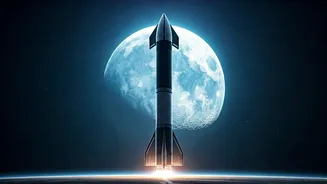
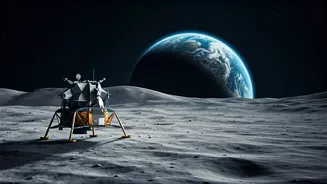
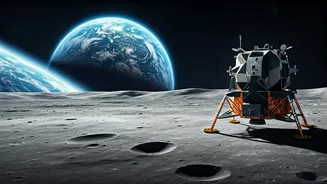
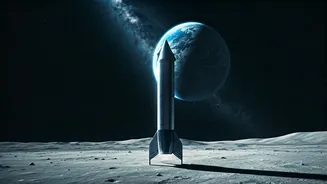
NASA is on the cusp of a monumental achievement with the Artemis II mission, preparing to send its first crewed voyage around the Moon since the Apollo
era. The mission's rollout to the launch pad signifies a critical step in this ambitious endeavor. Despite a temporary delay due to a rare Arctic outbreak, the simulated launch window opens soon, highlighting the intricate planning and robust systems in place. This mission is not just about a lunar flyby; it's a vital precursor to future landings and establishing a sustained human presence beyond Earth. The excitement is palpable as the historic mega moon rocket undergoes final preparations, embodying humanity's ongoing drive to explore the final frontier and pushing the boundaries of what's possible in space travel.
Cosmic Discoveries & Mysteries
The universe continues to unveil its secrets, with recent observations offering tantalizing hints of life and profound cosmic phenomena. Stunning time-lapse imagery has captured three massive eruptions on the sun, offering a closer look at our star's dynamic nature. Meanwhile, Jupiter's moon Europa is showing signs of life-friendly molecules escaping its icy shell, fueling speculation about potential subsurface oceans. Saturn's largest moon, Titan, is also a subject of intrigue, with a new study suggesting 'slushy tunnels' that might harbor alien life. Astronomers are eagerly anticipating the 'Great Comet of 2026,' which could become visible to the naked eye, and NASA's new Roman Space Telescope is complete, poised to discover thousands of exoplanets. These discoveries underscore the vastness and complexity of the cosmos, pushing the boundaries of our scientific understanding and igniting our imagination about what lies beyond.
Technological Leaps & Challenges
Innovation in space technology is rapidly advancing, addressing both the opportunities and challenges of venturing further into the cosmos. The potential for orbiting satellites to collide within days is a stark reminder of the growing problem of space debris, a challenge that tractor beams inspired by science fiction might help to solve. On Mars, the subtle difference in the passage of time poses new hurdles for long-duration crewed missions, requiring careful consideration in mission planning. NASA's pursuit of returning samples from Mars, crucial for detecting signs of life, has faced setbacks, with China now positioned to retrieve samples. Even as we look forward, past events like the accidental destruction of a Russian launch pad as astronauts departed for the ISS serve as a reminder of the inherent risks and complexities of spaceflight. The development of powerful rockets like Blue Origin's New Glenn, despite facing delays due to solar storms, represents the ongoing effort to develop the reliable infrastructure needed for future interplanetary travel and exploration.
Ancient Echoes & Genetic Uniqueness
Beyond the cutting edge of space exploration, recent archaeological and genetic findings shed light on Earth's own ancient past and the diversity of its inhabitants. In Germany, a 7,500-year-old deer skull headdress has been unearthed, providing evidence of shared sacred items and ideas between hunter-gatherers and the region's first farmers, illustrating early forms of cultural exchange. On a biological note, a remote region in Greece harbors one of Europe's most genetically distinct populations, highlighting the rich tapestry of human diversity shaped by millennia of isolation and adaptation. Furthermore, the astonishing journey of saltwater crocodiles across the Indian Ocean to reach the Seychelles before their extinction by humans demonstrates the incredible resilience and migratory capabilities of species in pre-human eras. These discoveries, from ancient artifacts to unique genetic profiles, enrich our understanding of our planet's history and the intricate web of life that has evolved upon it.