






The Challenge of Hardness
Tungsten carbide-cobalt (WC–Co) is a vital material celebrated for its unparalleled hardness and resistance to wear, making it indispensable for industries
that require robust cutting and construction tools. However, its very hardness presents a significant manufacturing hurdle. Traditional methods, such as powder metallurgy, involve pressing and sintering powders, a process that often leads to substantial material wastage because it's difficult to shape once solidified. This inherent resistance means production can be slow and expensive, with a considerable amount of the costly raw materials ending up as scrap rather than finished product. Consequently, industries relying on this material for demanding applications, where ordinary metals would quickly fail under abrasion and heavy loads, face ongoing efficiency challenges. The quest for a more economical and less wasteful approach to producing this essential industrial cornerstone has been a long-standing pursuit.
Additive Manufacturing Innovation
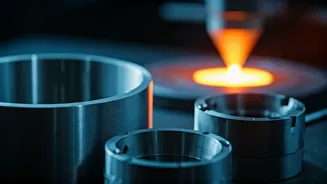
Researchers are now exploring a pioneering additive manufacturing (AM), or 3D printing, approach combined with hot-wire laser irradiation to overcome the limitations of WC-Co production. This cutting-edge technique aims to deposit the cemented carbide material precisely where it is needed, dramatically cutting down on waste and associated costs while ensuring the material's superior performance remains intact. Unlike subtractive manufacturing, which starts with a larger block and carves away excess material, AM builds the component layer by layer. The specific method under investigation, laser hot-wire welding, integrates a laser beam with a preheated filler wire. Preheating the wire enhances the deposition rate, meaning more material can be added in a shorter time, and improves overall energy efficiency by reducing the laser's workload during the build process. This selective deposition promises a significant departure from conventional methods, offering a more targeted and efficient route to manufacturing high-performance WC-Co components.
Process Variations Explored
The study meticulously evaluated two distinct configurations for applying the hot-wire laser irradiation technique to WC-Co. In the first setup, the tungsten carbide-cobalt rod was positioned at the leading edge of the build, with the laser focused on its upper surface. The alternative approach involved the laser taking the lead, targeting the interface between the base material (iron) and the bottom of the WC-Co rod. A critical aspect of both methods was the deliberate choice to soften, rather than fully melt, the constituent metals. This controlled heating strategy is designed to facilitate the formation of cemented carbide while mitigating the severe thermal stresses that can compromise the integrity of brittle, hard materials during processing. By carefully managing the temperature, the researchers aimed to achieve successful material deposition without causing detrimental microstructural changes, a common issue when working with such resilient substances.
Defect-Free Carbides Achieved
The experimental results were highly encouraging, demonstrating that this novel AM technique can effectively preserve the exceptional hardness and mechanical strength characteristic of conventionally produced WC-Co cemented carbides. The resulting material achieved an impressive hardness exceeding 1400 HV (Vickers hardness), a unit measuring resistance to indentation, without exhibiting any discernible defects or decomposition. Materials reaching this hardness level are among the most resilient used in industrial settings, surpassed only by superhard substances like diamond and sapphire. While the primary objective of defect-free cemented carbide mold fabrication was met, the study also noted variations in outcomes depending on the specific configuration used. For instance, the rod-leading method occasionally resulted in WC decomposition on the upper portions of the build, leading to imperfections. The laser-leading method, while avoiding this specific issue, faced challenges in consistently maintaining the required hardness levels. However, by incorporating a nickel alloy-based intermediate layer and diligently controlling process temperatures (keeping them above cobalt's melting point but below the temperature that promotes grain growth), the researchers successfully produced AM-fabricated cemented carbide that did not compromise on material hardness.
Future of Advanced Materials
The promising success of this research serves as a robust foundation for further refinement and expansion of the technique. Key areas for future development include addressing the issue of cracking, a common challenge with hard materials, and enhancing the ability to fabricate more intricate and complex shapes. The innovative concept of forming metal materials by softening them instead of outright melting them holds significant potential, according to the study's corresponding author. This novel approach is not limited to cemented carbides but could be applicable to a broader range of difficult-to-process materials. Looking ahead, the research team prioritizes fabricating functional cutting tools, exploring the incorporation of alternative materials, and conducting in-depth investigations into methods for further improving the durability of these advanced components. This work marks a significant step towards more efficient and sustainable manufacturing of critical high-performance materials.