





A Cosmic Mystery
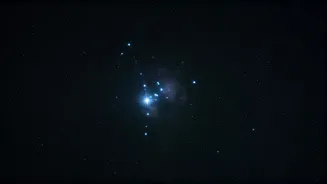
Betelgeuse, the prominent red supergiant in the Orion constellation, has long captivated astronomers. Its fluctuating brightness and unusual behavior hinted
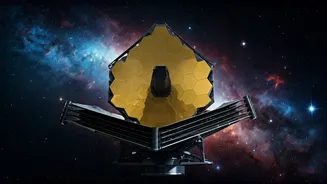
at something more than met the eye. The Hubble Space Telescope, a renowned eye in the sky, was instrumental in observing the star. The discovery of a hidden companion star represents a significant moment in astronomical research, unveiling clues about the star's past. The quest to understand Betelgeuse's secrets has been ongoing, and these recent findings contribute significantly to that pursuit, providing a new perspective on the red giant and its surroundings.
Hubble's Observation
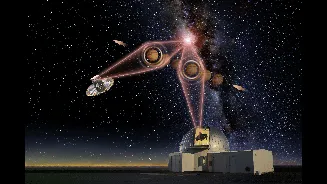
Hubble's observations were the key to unlocking the truth. Through detailed imaging, scientists were able to identify a wake, or a trail, behind Betelgeuse. This indicated the presence of another star, hidden from direct view, interacting with the larger red giant. The data collected was meticulously analyzed, supporting the idea of a previously unseen companion. These observations were vital to the astronomers' work, proving the existence of a partner star and explaining some of the red giant's peculiar behaviors. The telescope's advanced capabilities allowed scientists to see beyond what was visible, confirming that Betelgeuse wasn't alone in space.
Unveiling the Companion
The discovery of the companion star helps to answer key questions about Betelgeuse. For years, scientists have hypothesized that the red supergiant's behavior could be tied to an unseen companion. Now, with the Hubble's observations, these theories are gaining ground. The companion star influences Betelgeuse in many ways, including its mass loss and fluctuations in brightness. The relationship between the two celestial bodies is essential for knowing the life cycle of stars. These findings enable astronomers to better comprehend stellar dynamics and improve their comprehension of these majestic cosmic objects.
What This Means
This finding provides a new context for understanding how stars develop and interact within a system. The companion star has a profound impact on Betelgeuse, influencing its evolution and behavior, from its brightness to the amount of material it sheds into space. This discovery enhances the knowledge regarding stellar evolution. It prompts new questions regarding binary star systems and the future of Betelgeuse. Scientists can now formulate and test new theories about star lifecycles. Furthermore, it helps to demonstrate the vastness and complexity of the universe.