






A Cosmic Wake
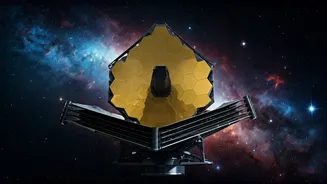
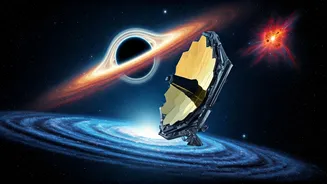
The Hubble Telescope, a pivotal instrument in astronomical research, has played a key role in making this intriguing discovery. Its sensitive equipment
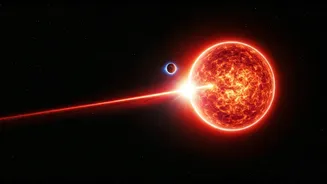
and unique vantage point have enabled scientists to view the wake of Betelgeuse's companion. The wake, an indicator of the star's presence, provided substantial evidence to back the long-held hypothesis about the nature of this mysterious celestial body. This has given scientists a more comprehensive insight into the dynamics and behavior of Betelgeuse and its surrounding stellar environment, providing a new layer of knowledge about these massive stars.
Betelgeuse's Secrets
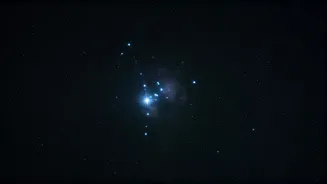
Betelgeuse, a red supergiant and one of the brightest stars in the night sky, has been a source of fascination for astronomers. Its peculiar characteristics and cyclical dimming have fueled considerable speculation. The confirmation of a companion star offers a new way of understanding the observed behavior of Betelgeuse. This discovery may shed light on how it interacts with its surroundings and how these interactions might affect the star's evolution, including its potential transition to a supernova. Moreover, it aids in refining astronomical models and making more accurate predictions about these cosmic events.
Hubble's Observation Power
Hubble's precision and capabilities were crucial in detecting the faint signature of the companion star. The telescope's capacity to collect and analyze light from distant objects has provided unprecedented insights into celestial phenomena. The observation confirms the presence of the companion star, which was previously theorized based on various indirect data. It offers clear evidence for its existence and its role in influencing the observed characteristics of Betelgeuse. The ability to observe the wake of the companion allows for a greater understanding of the interactions between both stars.
Future Implications
The discovery opens exciting avenues for future research. Scientists can now focus on studying the companion star's properties, such as its size, mass, and orbital characteristics. This could refine our understanding of how binary systems, where two stars orbit each other, function and evolve. Moreover, this knowledge can be used to improve astronomical models and enhance our ability to predict the behavior of other celestial objects. This discovery from Hubble has not only expanded our comprehension of Betelgeuse, but it has also added a new dimension to how we study the universe.