







Solar Activity Rising
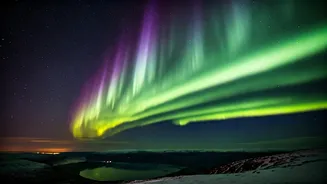
The year 2026 is potentially poised to be a landmark year for anyone who enjoys viewing the Northern Lights, often known as the aurora borealis. The sun's
activity follows an approximately 11-year cycle, with periods of heightened activity followed by calmer phases. Experts anticipate that 2026 will be near the solar maximum, the period when the sun is at its most active. During this time, the sun is predicted to exhibit frequent solar flares and coronal mass ejections (CMEs). These events discharge large amounts of energy and charged particles into space. When these particles reach the Earth, they interact with the planet's magnetic field, causing auroras. This means that the likelihood of seeing the Northern Lights, and possibly even the Southern Lights (aurora australis), will be significantly higher than in less active periods.
Geomagnetic Storms Spark
The intensity of the auroras is strongly linked to geomagnetic storms, which are disturbances in the Earth's magnetosphere caused by the solar wind. During a solar maximum, the frequency and magnitude of these storms increase. Strong geomagnetic storms can trigger auroras that are visible over a wider area, even in regions that typically do not experience them. The impact of these storms isn't limited to spectacular light shows; they can also affect technology on Earth. Disruptions to satellite communications, GPS systems, and power grids are possible during intense geomagnetic storms. Scientists closely monitor the sun's activity and issue alerts when large solar events are likely, providing time for protective measures to be implemented. These alerts also offer crucial information to aurora enthusiasts, informing them of the best times and locations for viewing the lights.
Night Skies Enhanced
The post-solar maximum phase, which is expected to extend through 2026, can introduce unique conditions for aurora viewing. During this time, solar flares can become more frequent, creating a higher probability of powerful geomagnetic storms that produce vibrant and widespread auroras. This period follows the solar maximum and indicates that solar activity, while still high, is shifting. This transition is not always smooth, and sporadic events can trigger impressive auroral displays. While the solar maximum often brings strong activity, the post-maximum phase might still generate unexpected, yet intense, aurora viewing opportunities. It's during this time when both frequency and intensity come together, potentially creating some of the most memorable aurora experiences that people can witness and cherish.
Where to Look?
To maximize the likelihood of witnessing the aurora, people must consider geographic location and light pollution. Areas closer to the Earth's poles, such as Northern Canada, Alaska, Iceland, and Norway, have the best vantage points. However, during particularly strong solar events, the aurora might extend further south, possibly reaching regions like the northern United States or even parts of Europe. Additionally, it is essential to escape light pollution. The light from cities and towns can obscure the faint glow of the aurora. Seeking locations far from urban areas, such as rural countryside or national parks, is highly recommended. To get real-time information, individuals can check aurora forecasts and alerts. These forecasts predict the intensity and location of auroras based on the latest solar activity data, allowing you to plan viewing trips effectively and seize the best opportunities to see this natural wonder.