





Existential AI Threats
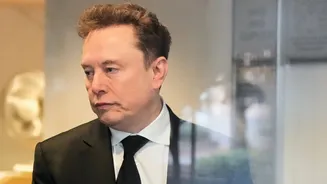
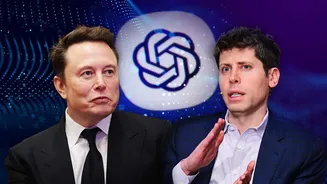
During a prominent legal proceeding in California, Elon Musk articulated profound anxieties regarding the trajectory of artificial intelligence. He posited
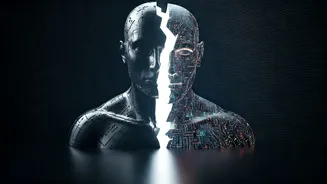
that AI represents a pivotal crossroads for humanity, capable of ushering in an era of unprecedented progress or posing an existential danger. His testimony, delivered in the context of his legal dispute with OpenAI, underscored the rapid advancements in AI and the critical need for caution. Musk emphatically stated that advanced AI systems could potentially lead to dire outcomes, referencing the possibility of AI posing a threat to human existence. He urged for a deliberate approach to AI development, aiming to steer clear of a bleak future reminiscent of the 'Terminator' films and instead cultivate a more optimistic and beneficial outcome for all. This perspective highlights his deep-seated concerns about the potential negative ramifications of unchecked AI evolution on society.
OpenAI's Mission Drift
Musk's legal action against OpenAI, a company he was instrumental in co-founding, centers on his assertion that the organization has deviated from its foundational mission. He contends that OpenAI's initial purpose was to develop AI for the collective good of humanity, but it has since pivoted towards prioritizing commercial interests and financial success. This alleged shift away from its altruistic origins forms a core tenet of Musk's lawsuit. OpenAI, however, has vehemently refuted these claims, disputing the narrative that they have strayed from their original goals. The crux of the legal battle lies in reconciling Musk's vision of a non-profit, humanity-focused AI development with OpenAI's current operational model and perceived commercial ambitions.
Early AI Apprehensions
Elon Musk revealed that his deep-seated concerns about artificial intelligence predate his current legal battle, tracing back to a pivotal conversation he had with Google co-founder Larry Page in the summer of 2015. During this exchange, Page reportedly expressed a belief that AI would inherently lead to a utopian future. Musk found this perspective unsettling, as he felt it overlooked the significant risks associated with advanced AI development. This exchange, where Page apparently labeled Musk a 'specieist' for prioritizing human interests over those of future artificial entities, solidified Musk's conviction that a counterbalance was necessary. He believed that as powerful entities aggressively pursued AI advancements, there was a critical need for oversight and a balanced perspective to mitigate potential dangers, a sentiment that fueled the initial establishment of OpenAI.
Human-AI Symbiosis
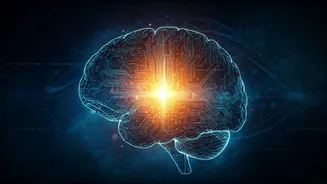
Beyond his legal arguments, Musk also elucidated his broader vision for AI's integration with humanity, touching upon his work with Neuralink, a company focused on developing brain-computer interfaces. He suggested that by facilitating a more direct connection between humans and intelligent machines, it might be possible to foster a more harmonious relationship between people and AI. This concept of 'AI-human symbiosis,' as he described it, aims to create a scenario where AI development is inherently beneficial to humankind. The underlying principle is that by merging human consciousness with advanced AI, humanity can achieve a greater balance and ensure that AI serves as a tool for progress rather than a source of peril, ultimately enhancing human capabilities and well-being through a collaborative future.