





Neural Connection Conundrum
The fundamental obstacle to brain transplantation lies in the sheer complexity of neural connections. Even a partial transfer, like that of the cerebellum,
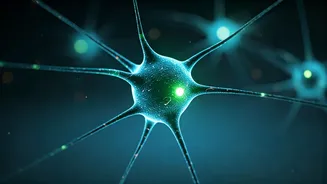
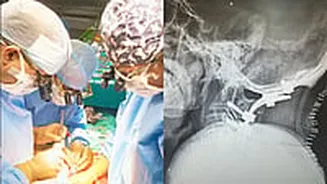
is currently infeasible. This crucial brain region houses millions of specialized Purkinje cells, each intricately linked to thousands of other neurons. The exponential nature of these connections far surpasses our current technological capacity to replicate or bridge them. Theoretically, attaching a brain at the spinal cord level might seem simpler due to more straightforward nerve connections compared to the brain's dense neural web. While surgeons could potentially suture the neck's skin, muscles, blood vessels, and bones, and even align the spinal nerves, the critical challenge remains enabling these severed nerve cells to communicate effectively. Scientists have yet to devise a method to re-establish functional communication between these disparate neural networks, rendering any form of brain transplant purely speculative at this point in time.
Historical Attempts & Setbacks
The aspiration for brain transplantation dates back to the early 1900s, spurred by advancements in blood vessel suturing techniques. Early experiments, primarily conducted on dogs and monkeys, met with limited success. The animals involved in these trials typically survived for only a few days. Researchers grappled with establishing a viable vascular system to nourish the transplanted brain and faced significant hurdles in overcoming host rejection of the foreign tissue through immunosuppressive measures. A more prominent series of experiments began in 1970 when Dr. Robert J. White transplanted the heads of monkeys onto different bodies. Post-surgery, these animals demonstrated the ability to chew and swallow, and electroencephalogram readings indicated brain activity. However, none of the subjects survived for more than nine days, underscoring the persistent challenges in maintaining brain function and preventing rejection in such radical procedures.
Ethical and Scientific Objections
Inspired by earlier work, Italian surgeon Dr. Sergio Canavero proposed a human head transplant in 2013, a notion that was met with widespread criticism from the scientific and ethical communities. Colleagues raised serious concerns regarding both the scientific viability and the ethical implications of such a procedure. Canavero's subsequent announcement in 2017 claiming the first head transplant on a human cadaver was decried as "the continuation of a despicable fraud" by prominent bioethicists. The core issues cited included the immense likelihood of immune system rejection, a major obstacle in all organ transplantation, and the profound difficulty in reconnecting a brain to an entirely new nervous system. The fundamental inability to re-establish functional neural pathways means that even if the physical connection were made, the brain would likely be unable to control the new body or process sensory information, rendering the procedure medically meaningless.
Future Potential: Stem Cells
While complete brain transplantation remains firmly in the realm of science fiction, advancements in regenerative medicine offer a glimmer of hope for repairing damaged brain tissue. Stem cell therapy and the development of brain organoids present potential avenues for replenishing neural function. Stem cells, when guided to develop into neurons, may possess a greater capacity to integrate into existing neural circuitry compared to mature neurons. This is attributed to their inherent plasticity. Ideally, these stem cells would be derived from the patient's own body to minimize the risk of immune rejection. Alternatively, standardized donor cell lines could streamline quality control processes. These lab-grown neural tissues, known as organoids, have shown promise; a 2023 study demonstrated that human brain organoids could help repair injured rat cortex. However, such therapies are still years away from clinical application and would need to address complex issues like providing adequate vascular supply to the new tissue.