






Congressional Demand for Testimony
In the wake of significant security lapses, United States House lawmakers have formally requested that Instructure executives provide testimony regarding
recent cyberattacks that compromised the personal data of millions of students globally. The House Homeland Security Committee, led by Representative Andrew Garbarino, has initiated an investigation into these incidents, asserting its jurisdiction over matters pertaining to national security. The committee’s chair has penned a letter to Instructure's chief executive, Steve Daly, expressing concerns about the repeated breaches facilitated by hackers exploiting vulnerabilities in the company’s systems. The investigation is also examining the company’s engagement with the Cybersecurity and Infrastructure Security Agency (CISA), a US government body assisting with the incident response. The core of the congressional inquiry centers on understanding the extent of the data theft, the nature of the compromised information, and Instructure's strategy for mitigating further risks and adequately informing affected educational institutions and the students themselves.
Criticism of Response and Ransom Payment
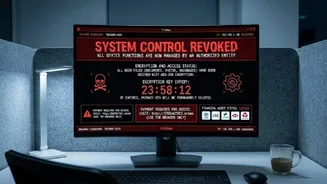
Instructure, the company behind the widely used Canvas educational software, has faced considerable criticism for its handling of the cyber intrusions. The situation intensified when it was revealed that the same security vulnerability was exploited in two separate attacks, leading not only to the theft of vast amounts of sensitive student data but also to the defacement of school login pages. Adding to the controversy, Instructure recently announced that it had “reached an agreement” with the cybercriminals and claimed to have received confirmation from them that the stolen data had been deleted. However, this approach of paying ransoms is widely discouraged by security experts, who warn that such payments can embolden future attacks and that there is no guarantee hackers will actually purge the compromised information, as they may retain it for future extortion attempts. The second breach, occurring after the initial incident, has specifically raised alarms regarding Instructure’s incident response capabilities and its fundamental duty to protect the data entrusted to its care by educational entities and individuals.
Systemic Vulnerabilities Under Review
The repeated exploitation of Instructure's systems by the same group of hackers has prompted the House Homeland Security Committee to delve deeper into what may represent broader systemic vulnerabilities within major educational technology providers. Representative Garbarino highlighted in his letter that the scale and timing of the breaches, coupled with Instructure's apparent inability to contain the threat actor after the initial intrusion, present exactly the kind of critical weaknesses that the committee is tasked with scrutinizing. The investigation seeks to ascertain whether Instructure’s security protocols and incident management frameworks are robust enough to safeguard the personal and academic information of millions of students who rely on their platform daily. The outcome of this congressional inquiry could have significant implications for data security standards and regulatory oversight within the ed-tech sector, potentially leading to new mandates or stricter compliance requirements for companies handling sensitive student information.