
The AI Revolution
Artificial intelligence (AI) has rapidly advanced in recent years, impacting various sectors, including healthcare, finance, and transportation. Machine
learning algorithms, a subset of AI, enable systems to learn from data without explicit programming. This allows AI to make predictions, automate tasks, and solve complex problems. For example, AI-powered diagnostic tools are enhancing medical accuracy, while AI-driven financial models are optimizing investment strategies. The ongoing developments in AI promise further efficiency and breakthroughs across diverse domains. However, there are ethical concerns about AI, including job displacement and data privacy, which are also being discussed to ensure responsible development and deployment.
Sustainable Energy Solutions
The global shift towards sustainable energy sources is accelerating, driven by environmental concerns and a need for energy independence. Solar, wind, and hydropower are becoming increasingly cost-effective, driving significant investments in renewable energy infrastructure. The deployment of advanced battery technologies and smart grids is enabling more efficient storage and distribution of clean energy. Scientists and engineers are also exploring innovative solutions, such as green hydrogen production and carbon capture technologies, to mitigate climate change and reduce dependence on fossil fuels. The growth in renewable energy represents a vital step towards creating a more sustainable future.
Biotechnology Breakthroughs
Biotechnology is rapidly evolving, with advancements in areas such as gene editing, personalized medicine, and biomanufacturing. CRISPR technology allows scientists to precisely edit genes, paving the way for potential cures for genetic diseases and improved agricultural yields. Personalized medicine tailors treatments to an individual's genetic profile, increasing treatment effectiveness and reducing side effects. Biomanufacturing uses biological systems to produce medicines, materials, and fuels, offering sustainable and efficient alternatives to traditional manufacturing processes. These biotechnology breakthroughs offer unprecedented opportunities to address global challenges in health, agriculture, and environmental sustainability, revolutionizing how we approach these issues.
Quantum Computing Emerges
Quantum computing has the potential to transform computation, offering unprecedented processing power that surpasses classical computers for specific tasks. Quantum computers utilize quantum bits, or qubits, which can exist in multiple states simultaneously, enabling faster and more complex calculations. Researchers are developing quantum algorithms to solve problems in drug discovery, materials science, and financial modeling. However, quantum computing remains in its early stages of development, with significant challenges related to qubit stability and scalability. As this technology matures, quantum computers promise to unlock new scientific insights and drive innovation across various industries, creating unprecedented possibilities.
Space Exploration Advances
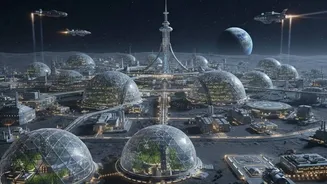
Space exploration continues to captivate the world, with ongoing missions to the Moon, Mars, and beyond. Advances in rocketry and spacecraft design have lowered the cost of space travel, enabling more frequent and ambitious missions. The development of reusable rockets, private space companies, and international collaborations are expanding access to space. Space-based technologies, such as satellite imagery and communication systems, provide vital data for environmental monitoring, weather forecasting, and global connectivity. Space exploration inspires scientific discoveries, technological innovations, and expands our understanding of the universe, and will continue to drive human progress.