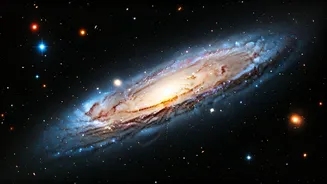

Galactic Collisions Revealed
Scientists have recently observed that when galaxies crash into each other, the supermassive black holes at their cores become more active. Using data
from the Euclid telescope, researchers found a strong link between these collisions and the heightened activity of black holes. When galaxies merge, the gravitational forces cause gas and dust to be funneled towards the black holes, fueling their growth and causing them to emit enormous amounts of energy. These observations provide valuable insights into how these massive black holes, found at the heart of most galaxies, evolve and interact with their surroundings. The Euclid mission has allowed scientists to peer deep into the universe, revealing these energetic processes that were previously hidden from view.
Mapping Galaxy Clusters
In addition to the study of black holes, researchers are making strides in mapping galaxy clusters. New X-ray mapping techniques have allowed astronomers to see the invisible engines that power these clusters. Galaxy clusters, the largest structures in the universe held together by gravity, contain hundreds or even thousands of galaxies bound by hot gas and dark matter. The Chandra X-ray Observatory's ability to create detailed X-ray maps has allowed scientists to identify and understand the intricate processes within galaxy clusters, such as the flow of hot gas and the interactions between galaxies. The new maps expose the dynamic nature of these clusters, revealing how they evolve over billions of years and how their properties are shaped by interactions with their environments.
Impact of Findings
These discoveries, from the study of colliding galaxies to the mapping of galaxy clusters, significantly enhance our understanding of the universe's structure and evolution. The observed relationship between galaxy collisions and black hole activity clarifies how these central objects grow and influence their host galaxies. Detailed X-ray mapping of galaxy clusters gives a clearer picture of how these massive structures form and interact over time. These observations improve our knowledge of the processes that shape the universe, from the local environment to the largest cosmic structures. These findings will continue to guide future research, as scientists use the information to refine their models of the universe.