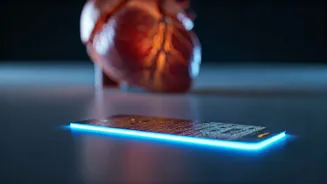








New Cardiac Biomarker Sensor
Researchers from BITS Pilani–Hyderabad and RMIT University have jointly developed a novel biosensor that offers a promising solution for the early detection
of heart attacks. This innovative device is engineered to identify myoglobin, a protein that signifies damage to the cardiac muscle and is released into the bloodstream shortly after such an event. The significance of this development lies in its ability to enable physicians to diagnose cardiac episodes much earlier than many existing methods allow. Traditional laboratory diagnostics often come with substantial costs, prolonged turnaround times, and a reliance on complex laboratory setups. In contrast, this new sensor boasts a lightweight, flexible design and is exceptionally economical, making it an ideal candidate for portable use and point-of-care testing. This focus on affordability and accessibility underscores the project's aim to translate advanced sensing technology into practical cardiac diagnostic tools that can be widely deployed.
Accessibility for All
The overarching goal of this Indo-Australian collaborative effort is to bridge the gap between advanced diagnostic capabilities and widespread accessibility. Lead investigator Sanket Goel emphasized that the team is driven by the aspiration to make early heart attack detection not only accurate but also readily available to a larger population. Associate investigator Sayan Das further elaborated that the life-saving potential of early detection is fully realized only when it is affordable and can be implemented on a large scale. This sentiment highlights the critical need for diagnostic tools that can transcend the limitations of current healthcare infrastructure. The potential impact is particularly profound for underserved areas, including rural hospitals, emergency response units, and healthcare facilities with limited resources, where access to sophisticated diagnostic equipment is often a significant challenge. Ms. Mohsina Afrooz, a joint doctoral researcher, articulated the vision for this technology: to simplify and expedite heart diagnostics, thereby making them accessible to everyone.
Collaborative Research Excellence
This pioneering research is the fruit of a robust collaboration between two distinguished institutions: the MMNE Laboratory at the BITS Pilani–Hyderabad Campus and the Centre for Opto-Electronic Materials and Sensors (COMAS) at RMIT University in Australia. This partnership has successfully converged expertise from various fields, including advanced materials science, biosensing technologies, and biomedical engineering, creating a synergistic environment for innovation. The findings from this significant research endeavor have been formally recognized and published in the internationally respected journal, IEEE Sensors Letters. Furthermore, the translational potential of this work has been acknowledged with the filing of an Indian patent, signaling a clear pathway towards practical application and market readiness. This collaboration underscores the power of international scientific partnerships in driving forward critical advancements in healthcare technology.