
Dark Matter Unveiled
Astronomers using the Hubble Telescope have made a groundbreaking discovery: they've identified a starless dark matter cloud, named Cloud 9. This unique
cloud offers a rare glimpse into the universe's hidden structure. Dark matter, which constitutes a significant portion of the universe's mass, is invisible. Its presence can only be inferred through its gravitational effects on visible matter. The discovery of Cloud 9 has opened a window into the dark universe, enabling scientists to study dark matter in unprecedented detail and improve our understanding of how galaxies and larger structures in the cosmos are formed.
Betelgeuse's Companion Revealed
Hubble has also confirmed a long-held theory about Betelgeuse, a red supergiant star. The telescope detected the wake of a hidden companion star. The confirmation supports the idea that Betelgeuse, which had displayed unusual behavior, is interacting with another star. Scientists had suspected the presence of a companion star because of Betelgeuse's periodic dimming. This discovery sheds new light on stellar evolution and the complex dynamics within binary star systems. It helps researchers understand how massive stars evolve and eventually meet their explosive end as supernovae.
Hot Young Galaxy Cluster
Hubble's capabilities extend to observing distant, early galaxies. Astronomers have identified a shockingly hot, young galaxy cluster that challenges existing theories. This cluster exhibits characteristics that differ from expectations, leading to revisions in cosmological models. The cluster's high temperature and rapid development provide valuable insights into the evolution of galaxies. This anomaly underscores the dynamic nature of the universe and encourages scientists to reevaluate their assumptions.
Artemis 2's Lunar Flight
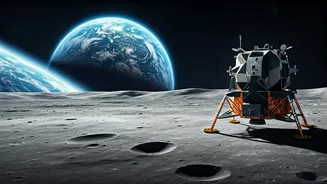
Another significant development is NASA's planned Artemis 2 Moon mission, potentially launching in the near future. The agency's commitment to returning humans to the Moon includes this critical test flight. The Artemis program builds on the legacy of the Apollo missions, representing a new era of space exploration. The upcoming mission will be pivotal in evaluating the spacecraft and preparing for subsequent missions. The successful launch of Artemis 2 would be a key step towards establishing a sustainable human presence on the Moon and, ultimately, a gateway to Mars.