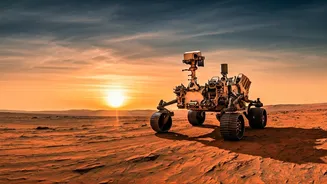

Martian Dawn's Glow
The Curiosity rover, a mobile laboratory on the surface of Mars, has consistently delivered captivating images showcasing the beauty of the planet. Among
these, the sunrises and sunsets are particularly noteworthy. These images aren’t just aesthetically pleasing; they offer vital insights into Mars's atmospheric composition. When the sun dips or rises, sunlight must travel through a thicker layer of the atmosphere. On Earth, this phenomenon scatters blue light more, leading to the familiar orange and red hues. On Mars, the atmosphere is finer, and the light scatters differently. Martian sunsets often display blue around the sun's position, while sunrises may show a less intense coloration. This contrast underlines how the Martian environment behaves and how differently light interacts with its particles. These observations have been pivotal in understanding the nature of the Martian atmosphere, which is much thinner than Earth's, composed primarily of carbon dioxide and with a trace of argon, nitrogen, oxygen, and water vapor.
Sunset's Blue Hue
Unlike Earth’s vivid sunset displays, sunsets on Mars often present a unique and unexpected hue. When the sun is near the horizon, the dust particles in the atmosphere scatter the blue light in a different way than the red or orange. This atmospheric phenomenon causes the blue color to be focused around the sun's location, creating a distinct visual effect. This blue tint is a remarkable contrast to the more conventional red or orange sunsets seen on Earth. This scattering of blue light is because of the fine dust suspended in the Martian atmosphere, which is different from the particulate matter in Earth's atmosphere. This difference in dust characteristics leads to variations in light dispersal, thus contributing to the unique colors observed during sunrises and sunsets on Mars. These observations provide crucial data for scientists, helping them understand how the planet's atmospheric dynamics are influenced by dust and other particulates.
Curiosity Rover's Role
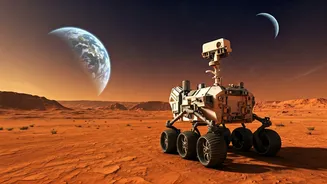
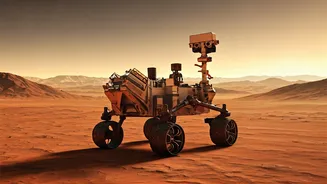
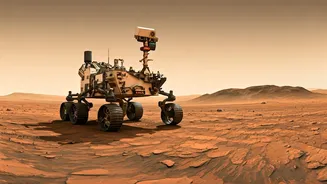
The Curiosity rover, an advanced robotic explorer, has been instrumental in capturing these Martian postcards. Equipped with sophisticated camera systems, the rover is capable of photographing the Martian landscape in vivid detail. This includes both the striking geological features and also the more ephemeral displays of light and color caused by atmospheric conditions. The images sent by Curiosity have not only captured the imagination of people globally but have also been valuable for scientific research. These visuals allow researchers to examine the interplay of light and atmospheric particles. The data collected helps in understanding Martian climate patterns and how they evolve throughout the year. The rover's mission has, in this manner, expanded our knowledge of the Red Planet, offering new perspectives on its climate.
A Journey's Conclusion
The Martian sunsets and sunrises sent back by the Curiosity rover provide a rare window into the alien beauty of Mars. These images show the planet in an entirely new light, highlighting its diverse atmosphere and landscape. They demonstrate how light is scattered differently on Mars compared to Earth, revealing unique hues. The sunsets and sunrises present the interaction of the sun with the Martian environment and, therefore, play a pivotal role in refining our insights into this distant planet. The Curiosity rover continues its work, sending images that deepen our appreciation of Mars. Future missions and technologies promise even more stunning discoveries and views, strengthening our scientific understanding and creating a lasting impact on our perception of Mars.