






Countdown to Lunar Orbit
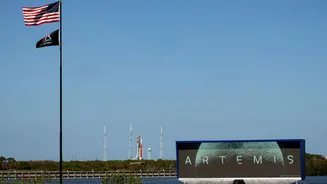
NASA is gearing up for a monumental moment: Artemis II, the agency's first crewed mission to the Moon in over half a century. The preparations are in their
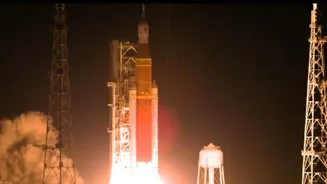
final stages at the Kennedy Space Center, with the launch slated for Wednesday. This mission signifies a pivotal advancement in human deep-space exploration, echoing the pioneering spirit of the Apollo program that concluded in 1972. Following a thorough mission management review, officials have confirmed that the spacecraft, its intricate systems, and the astronaut crew are all primed for liftoff. The only anticipated challenge remains the weather, though forecasters are optimistic, predicting an 80 percent likelihood of favorable conditions. Primary concerns revolve around potential cloud cover and robust winds that could influence the launch window. The initial launch opportunity opens on Wednesday, offering a two-hour window starting at 6:24 pm EDT (which translates to 10:24 pm GMT). Should any unforeseen issues arise, backup launch dates are available extending through April 6th, with subsequent daily evening windows strategically planned to align with optimal celestial mechanics, lunar positioning, and Earth's rotation.
Timing for India
The Artemis II mission's launch window is set to commence in the early evening hours in Florida on April 1st. Extensive pre-launch coverage will begin several hours before the scheduled liftoff, detailing a series of critical activities. These include the crucial fueling of the powerful Space Launch System rocket, meticulous final checks of all spacecraft systems, and the astronauts' ingress into the state-of-the-art Orion capsule. For space enthusiasts in India, the launch is anticipated to occur on April 2nd at approximately 3:54 am Indian Standard Time (IST). It is important to note that if technical challenges or unfavorable meteorological conditions prevent the planned launch on April 1st, the mission has flexibility. NASA has scheduled subsequent daily launch windows through April 6th, providing multiple opportunities to send the crew on their historic journey around the Moon. These backup slots are carefully chosen to maintain the mission's operational integrity.
Watch Live Broadcast
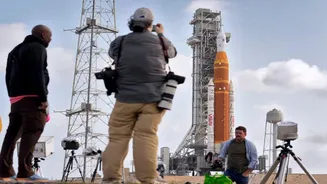
The spectacular liftoff of the Artemis II mission will be accessible globally through various NASA digital platforms, ensuring everyone can witness this historic event. The live broadcast is scheduled to commence at 12:50 pm EDT. Viewers can tune into NASA+ and NASA TV for an uninterrupted, advertisement-free viewing experience. Additionally, the agency will be providing live streams on its official YouTube channels, offering continuous visual coverage directly from the launch pad. NASA will also maintain a dynamic presence on its social media accounts, delivering real-time updates throughout the launch sequence. These updates will include exclusive, close-up perspectives of the Orion spacecraft and the immense Space Launch System rocket as they prepare for ascent from Launch Complex 39B. This comprehensive coverage ensures that individuals across the globe, including those in India, can closely follow every moment of this significant step in space exploration.
Mission Objectives & Crew
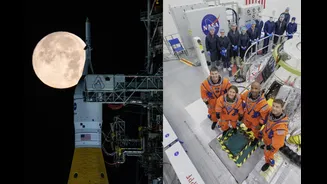
Artemis II represents the pioneering crewed flight within NASA's ambitious Artemis program, a long-term initiative aimed at re-establishing human presence on the Moon and developing a sustainable presence there, serving as a crucial stepping stone for future missions to Mars. Unlike its predecessor, Artemis I, which successfully tested the Orion spacecraft's capabilities without a crew, this mission is designed for human deep-space operations. The crew will not be landing on the lunar surface; instead, they will conduct a close flyby of the Moon, circumnavigating its far side before commencing their return journey to Earth. The primary objective of this approximately 10-day voyage is to rigorously test and validate the life-support systems, navigation capabilities, communication protocols, and overall deep-space operational readiness with astronauts on board. These systems are vital for long-duration spaceflight and cannot be fully assessed solely through ground-based simulations. The four astronauts selected for this historic mission are: Reid Wiseman, serving as mission commander; Victor Glover, the pilot and the first Black astronaut designated for a lunar mission; Christina Koch, a mission specialist renowned for holding the record for the longest single spaceflight by a woman; and Jeremy Hansen, a mission specialist and the first Canadian astronaut to venture towards the Moon. During their journey, they will perform vital tests, conduct medical and scientific assessments, verify suit pressurization, and observe lunar features during their flyby.
A Unique Fifth Member
Beyond the four highly trained astronauts, Artemis II will carry an unusual yet significant 'fifth member' aboard the Orion spacecraft. This special passenger is 'Rise', a plush toy meticulously hand-sewn by an eight-year-old boy named Lucas Ye. 'Rise' will serve as the mission's zero-gravity indicator. Once the spacecraft achieves microgravity conditions during its journey, the toy will begin to float, visually signaling the transition to weightlessness for the crew. This unique element was selected through a design competition, symbolizing the creativity and profound interest of young people in space exploration. It serves as a heartwarming reminder of the future generation for whom missions like Artemis are paving the way, fostering inspiration and a sense of wonder about the cosmos.
Weather's Crucial Role
The success of any rocket launch hinges significantly on prevailing weather conditions, and Artemis II is no exception. NASA, in close collaboration with the US Space Force's Space Launch Delta 45, maintains a constant and meticulous monitoring of various atmospheric elements. This includes scrutinizing ground-level winds, upper-level atmospheric currents, the density and thickness of cloud cover, the presence of any precipitation, and the potential for electrical activity in the atmosphere. Furthermore, the phenomenon of space weather, encompassing solar flares and the flux of charged particles from the sun, is continuously evaluated for its potential impact on crucial mission aspects like communications and navigation systems. As of the latest forecast issued on March 30th, conditions appear largely conducive for the scheduled launch. Forecasters indicate an 80 percent probability of acceptable weather within the initial launch window, suggesting a strong likelihood of a successful liftoff.