
Runaway Stars Explained
Runaway stars, stellar bodies ejected from their original star clusters or binary systems at high speeds, are key to this new approach. These celestial
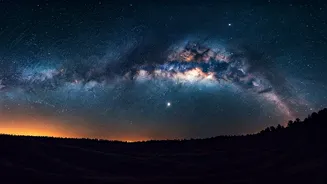
wanderers, propelled by gravitational interactions or supernova explosions, offer a unique perspective on the galactic environment. Their unusual trajectories, diverging from their birthplace, provide valuable clues. As they traverse through the Milky Way, they respond to the gravitational forces exerted by all matter, including the invisible dark matter. Scientists analyze the positions and velocities of these runaway stars to detect the subtle distortions caused by dark matter's gravitational pull. Because of their erratic journeys, these stars serve as sensitive probes, reacting to the invisible mass that shapes our galaxy. Their movements can be tracked, which, when properly interpreted, reveals the distribution of dark matter throughout the Milky Way, allowing for a better map of its presence.
Mapping Dark Matter
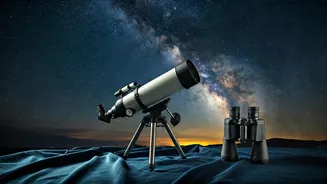
Mapping dark matter using runaway stars involves sophisticated techniques. Astronomers use telescopes to observe the positions and velocities of these stars. By comparing the observed positions of the stars with their expected locations, based on standard galactic models, scientists can detect discrepancies. These differences represent the gravitational influence of dark matter. Scientists develop complex simulations and mathematical models to interpret the data. These simulations incorporate various factors, including the known distribution of visible matter, the effects of stellar encounters, and the overall galactic potential. These models predict how runaway stars should move in the absence of dark matter. By comparing the simulations with the observed positions, researchers can reconstruct the dark matter distribution. Such an analysis reveals the density and structure of dark matter in different regions of the Milky Way, including the galactic halo and spiral arms. The overall methodology helps create a clearer picture of the dark matter and its effects.
Challenges and Innovations
Studying runaway stars presents several challenges. Identifying these stars requires meticulous observations. It is often challenging to distinguish runaway stars from other types of stars. Also, separating the effects of dark matter from the effects of visible matter is a complex task that demands detailed modeling. Another challenge is to account for the gravitational influence of other factors, such as the galactic bar and spiral arms, in order to isolate the effects of dark matter. Advances in technology and computational capabilities offer new opportunities. The advent of large-scale sky surveys and high-resolution spectroscopic data provides more comprehensive and accurate data. Improved computing power allows scientists to run more detailed simulations. Newer, advanced algorithms are being developed to interpret astronomical data, leading to a deeper understanding of dark matter. The combination of better data and advanced analytical tools enables astronomers to overcome the challenges and refine their maps of dark matter, further illuminating the composition of the universe.
Impact and Future Research
The research on runaway stars and dark matter provides valuable insights into the structure and evolution of the Milky Way. Precise knowledge of the dark matter distribution is essential for understanding how galaxies form and evolve. The findings are helpful in testing and refining existing galactic models, improving the accuracy of simulations, and making more precise predictions. Looking ahead, this work will guide future research. Scientists hope to apply this method to other galaxies, to explore dark matter distribution on a larger scale. They anticipate combining data from various sources to gain a more complete view of dark matter. This could include integrating data from gravitational lensing studies and the cosmic microwave background. As technology progresses, astronomers are poised to reveal even more about the hidden universe, furthering human understanding of the cosmos.