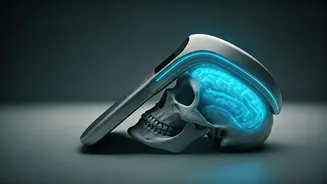







Wearable Brain Monitor
The advent of the non-invasive wearable device in 2025 marks a crucial milestone in medical technology. This ingenious device, engineered for ease of use,
measures blood flow to the brain without the need for intrusive procedures. Its primary function is to monitor cerebral blood flow, a critical indicator of brain health. The device works by employing advanced sensing technologies to detect and quantify blood flow dynamics within the brain. This design facilitates continuous, real-time monitoring of brain activity, enabling clinicians to identify potential neurological issues promptly. The compact and portable design ensures patient comfort and convenience, allowing for use in both clinical and home settings. Consequently, this innovation drastically improves the process of diagnosing and managing conditions affecting the brain by providing detailed and accessible data on blood flow patterns.
Revolutionizing Diagnostics
This wearable device significantly impacts the diagnosis of various brain-related disorders. It provides healthcare professionals with precise insights into the cerebral blood flow, facilitating early detection of conditions such as stroke, traumatic brain injuries, and vascular dementia. Traditionally, assessing cerebral blood flow required invasive methods like angiography or costly imaging techniques. However, this device offers a less invasive, more accessible, and cost-effective approach. Clinicians can now monitor subtle changes in blood flow that could indicate early stages of neurological problems, enabling timely interventions. This capability extends beyond diagnostics, allowing personalized treatment plans based on a patient's unique blood flow patterns. Moreover, this enhanced diagnostic capability fosters proactive patient care, improving overall treatment outcomes for various neurological conditions.
Enhancing Patient Care
The application of this non-invasive device enhances patient care significantly. The ability to continuously monitor cerebral blood flow allows healthcare providers to monitor the effectiveness of treatments and tailor interventions as needed. For patients recovering from stroke, this offers a means to assess the restoration of blood flow to affected areas, providing important feedback on recovery progress. In individuals with traumatic brain injuries, the device can monitor the impact of the injury on cerebral circulation, enabling optimal management. The device’s non-invasive nature means that patients experience greater comfort and a reduced risk of complications compared to traditional methods. Furthermore, the capacity to monitor patients remotely allows for more efficient management of chronic neurological conditions. This improved accessibility translates into earlier detection and more effective interventions, ultimately enhancing the quality of life for patients.
Future Applications Explored
Looking forward, the potential applications for this non-invasive wearable device extend far beyond current practices. Researchers are exploring its use in tracking cognitive performance in patients with mild cognitive impairments or Alzheimer's disease. The data on blood flow patterns could offer valuable clues to the disease's progression. Furthermore, it is being evaluated for use in monitoring the impact of treatments such as medication and rehabilitation therapy on brain activity. In the realm of sports medicine, the device is being considered for use in identifying and managing concussions among athletes. The capacity to continuously assess blood flow could help physicians to quickly determine when an athlete is safe to return to play, protecting athletes from potential brain injuries. As technology progresses, the scope of its use will likely expand, opening new avenues for personalized medicine and enhancing our understanding of the brain.