
Ammonia's Discovery on Europa
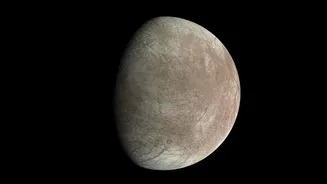
Recent observations have revealed the presence of ammonia on Europa's surface. This discovery stems from analyzing data gathered by advanced telescopes
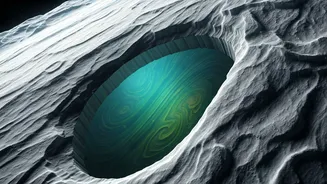
and space probes. Ammonia's presence is intriguing because it could indicate the existence of a subsurface ocean. Scientists are particularly excited about this because Europa's ocean is thought to be a potential habitat for life, hidden beneath a thick layer of ice. The finding is a significant step forward in the search for extraterrestrial life, spurring further exploration of Europa and other icy moons with similar characteristics. This finding is the result of collaborative efforts from various astronomical teams who utilized cutting-edge technologies and advanced analytical methodologies to determine the compound's existence.
Europa: A Potential Habitat
Europa, with its subsurface ocean, is viewed as one of the most promising locations in our solar system for finding life beyond Earth. The ocean, shielded from harsh radiation by a thick icy shell, is believed to have liquid water, a critical ingredient for life as we know it. Ammonia, a compound of nitrogen and hydrogen, is also present and could act as a nutrient in this environment. Additionally, ammonia could also affect the freezing point of water, potentially allowing the ocean to remain liquid even at lower temperatures, increasing its chances of sustaining life. Researchers are using advanced modeling and simulations to understand how ammonia might interact with other compounds within this environment, hoping to define the requirements to support potential life forms within the moon's watery depths.
Implications for Life
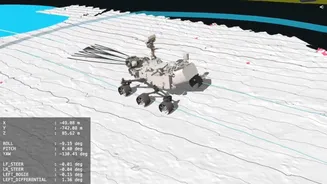
The presence of ammonia raises questions about Europa's potential to support life. Ammonia can function as a source of nitrogen, which is a vital element for living organisms. Furthermore, ammonia can interact with other compounds in the environment, creating a range of chemical reactions that may be favorable for life. The discovery has provided fresh impetus for space agencies to intensify missions to Europa. These missions aim to delve into the ocean, using sophisticated probes designed to penetrate the icy crust, collect samples, and look for signs of life. The data gathered would yield essential information about Europa's potential for habitability. It is a pivotal discovery that highlights the necessity of deeper research, which may eventually unravel secrets regarding life beyond Earth.
Future Missions and Research
Several forthcoming missions are designed to investigate Europa. NASA's Europa Clipper mission, for example, is equipped with a wide array of instruments designed to examine the moon's surface, its icy shell, and the potential for a subsurface ocean. These instruments will gather information about the composition of Europa's environment and look for evidence of life. Likewise, the European Space Agency is also planning missions to explore icy moons such as Europa. Researchers expect these missions to yield more data. The objective is to further understand the conditions on Europa and also to search for traces of extraterrestrial life. Space missions and scientific advancements will pave the way for a deeper understanding of Europa.