




A Fleeting Truce
In a surprising turn of events amidst ongoing complaints lodged with the US Federal Communications Commission (FCC) concerning their respective ventures,
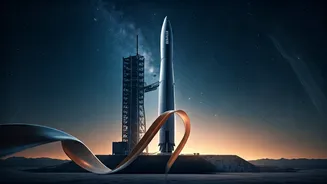
Amazon founder Jeff Bezos and SpaceX CEO Elon Musk have publicly acknowledged each other in a positive light. Bezos recently showcased a captivating nocturnal photograph of Blue Origin's formidable New Glenn rocket poised on its launchpad, hinting at its imminent third mission. This striking image, shared on social media platform X, depicted the illuminated rocket against the dark expanse of the night sky at Cape Canaveral Space Force Station. The shared moment of goodwill offered a temporary reprieve from the corporate wrangling, underscoring the complex relationship between these leading figures in the space industry.
New Glenn's Ascent
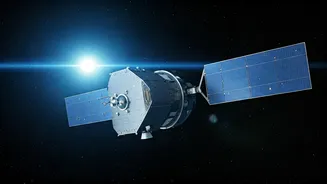
The visually impressive nighttime image of Blue Origin's New Glenn rocket did not go unnoticed by Elon Musk, who responded with a brief but notable compliment, stating, 'Looks good.' This exchange signaled growing recognition of Blue Origin's advancements, particularly as the company gears up for its NG-3 mission. Blue Origin CEO Dave Limp also contributed by sharing a daytime photograph of the New Glenn, revealing the AST SpaceMobile's BlueBird satellite nestled within the rocket's expansive 7-meter nosecone. The NG-3 flight represents a significant step for Blue Origin, as it intends to reutilize the very same booster that successfully flew on the NG-2 mission in November 2025. This first stage, affectionately nicknamed 'Never Tell Me the Odds,' has undergone refurbishment for its next deployment. While an official launch date remains unconfirmed by Blue Origin, public schedules from the Space Coast Office of Tourism tentatively mark the launch for April 17, 2026, at 6:45 a.m. ET, making it only the third flight for the New Glenn following its initial debut in January 2025.
Orbital Data Centers
The competitive landscape heated up as SpaceX formally submitted a letter to the FCC, addressing Amazon's petition to reject SpaceX's ambitious proposal for a one-million-satellite constellation designed for orbiting data centers. SpaceX's filing contended that if the FCC were to apply Amazon's criticisms to its own application, it should similarly scrutinize Blue Origin, founded by Jeff Bezos, which has also filed for a substantial 51,600 AI satellites intended for similar orbital data processing. Blue Origin's filing explicitly argues that the FCC should greenlight its plans, citing the 'insatiable demand for AI workloads' and positioning orbiting servers as a critical 'complement to terrestrial infrastructure.' This new compute tier, it suggests, would operate independently of Earth-bound limitations. The rationale is rooted in the explosive growth of artificial intelligence, machine learning, and cloud computing, which is creating an unprecedented need for data center capacity that current ground-based infrastructure is struggling to meet.