
Mind Control Technologies
The concept of mind control, prevalent in many sci-fi stories, has gained traction in the scientific community. While complete mind control remains in the realm
of fiction, significant progress has been made in brain-computer interfaces. Scientists are developing technologies that can interpret brain signals, allowing individuals to control devices with their thoughts. For example, people can control robotic arms or move cursors on computer screens. Furthermore, research into neuromorphic computing could eventually lead to the development of powerful AI systems capable of simulating complex cognitive processes. Although full-scale mind control is still distant, the advances in understanding brain function and the creation of advanced technologies show that many of the core concepts in mind control may develop into something more real.
Faster-Than-Light Travel
Traveling faster than the speed of light is a staple in science fiction, enabling interstellar journeys. However, current physics, primarily Einstein's theory of relativity, indicates that it's impossible for objects with mass to exceed the speed of light. Nevertheless, the search for solutions continues. Scientists and researchers explore speculative concepts like wormholes, theoretically tunnels through spacetime that could facilitate rapid travel across vast distances. Another idea is the Alcubierre drive, which would warp the fabric of spacetime, effectively moving a spacecraft without violating the speed of light. While practical applications are still theoretical, these concepts highlight the ongoing effort to overcome these boundaries. The possibility of breakthroughs in physics cannot be dismissed.
Artificial General Intelligence
The development of Artificial General Intelligence (AGI) – a machine with human-level intelligence that can learn, understand, and apply knowledge in diverse ways – is a focus of substantial research and development. The current focus on AI is on narrow AI, which excels at certain specific tasks. AGI, however, would be able to perform any intellectual task that a human being can do. Advancements in areas like neural networks, deep learning, and neuromorphic computing are paving the way. But hurdles remain. These include issues concerning how to create systems that can generalize knowledge, reason effectively, and exhibit true creativity. Moreover, ethical considerations regarding AI safety and control are also crucial. Though not yet realized, the pursuit of AGI continues to drive advances across numerous sectors.
Teleportation Realization
Teleportation, the instantaneous movement of matter from one place to another, is another common trope. Although the complete teleportation of complex objects remains beyond our current capabilities, quantum teleportation has made significant progress. Quantum teleportation involves transferring the exact state of a quantum particle from one place to another, without physically moving the particle itself. This technology is used for secure communication. It's important to remember that this process is limited to the quantum level and does not apply to the macroscopic movement of objects. Advances in quantum computing and related fields could push us closer to a future where teleportation might become feasible, albeit in a different form than what is seen in science fiction.
Robotic Companionship
The idea of robots with human-like qualities and functions is quickly changing from science fiction to reality. The development of advanced robotics, AI, and machine learning has accelerated the creation of companion robots. These robots are capable of performing various tasks. This ranges from simple interactions to more complex social interactions, providing companionship for elderly individuals or assistance with household chores. Furthermore, robotics are used in healthcare, manufacturing, and exploration. The ongoing research into improving robot autonomy, human-robot interaction, and the development of more sophisticated sensory systems means that the role of robots in daily life will grow significantly.
Space Colonies and Habitats
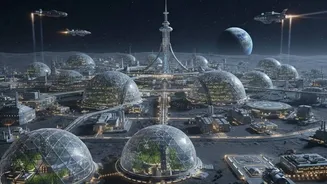
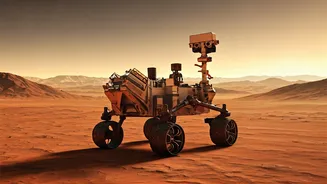
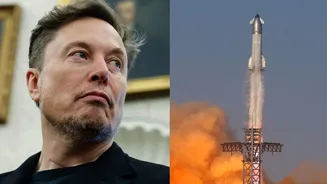
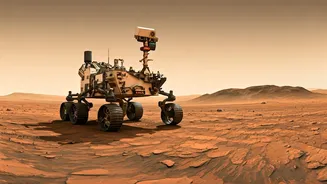
The establishment of permanent human settlements beyond Earth is a long-standing goal of space exploration. Though currently in the planning stage, several projects are actively pursuing the creation of space colonies and habitats. These include plans for bases on the Moon and Mars, and the development of orbital habitats. Some projects involve building spacecraft capable of supporting a substantial population. Technological developments in areas such as life support systems, resource utilization, and radiation shielding are critical for long-term survival in space. These missions face challenges such as overcoming the immense costs, and ensuring the health and well-being of the inhabitants. However, the potential for off-world settlements drives ongoing scientific and engineering efforts.
Advanced Medical Technologies
Science fiction frequently envisions medical advances that are far ahead of current technologies. Technologies such as nanotechnology, gene therapy, and advanced prosthetics are emerging as key aspects of the medical field. Nanotechnology involves the use of extremely small devices to diagnose and treat diseases at a molecular level. Gene therapy offers the potential to correct genetic defects and treat inherited diseases. Moreover, the development of sophisticated prosthetics and bionic enhancements are improving human capabilities. Advancements in bio-printing have enabled the creation of functional organs and tissues. These advances are helping to move these futuristic concepts into tangible treatments.
Virtual Reality Simulation
The use of virtual reality to create immersive, interactive experiences is gaining traction in various fields, from entertainment to training and education. Virtual reality (VR) and augmented reality (AR) technologies are constantly evolving. The development of VR headsets, haptic feedback systems, and realistic graphics are improving the immersive quality of these experiences. These technologies have applications in simulations for flight training, surgical procedures, and designing products. Although the level of realism portrayed in some sci-fi scenarios has not yet been achieved, the continuous improvements in processing power, display technology, and interaction methods are making virtual reality more engaging and practical for many applications.
Weather Control Systems
The concept of controlling the weather, seen in several science fiction stories, is still largely theoretical. However, some technologies and research are underway to influence weather patterns to a limited extent. Cloud seeding, for example, is used to encourage rainfall in specific areas. Scientists are also studying climate modeling and developing technologies to mitigate the effects of climate change. Efforts to understand and manipulate atmospheric processes are focused on small-scale interventions. Some of the challenges involve the complexity of weather systems and the unpredictable nature of global climate patterns. While complete weather control remains a distant goal, understanding weather systems and developing climate management techniques are vital steps.
Exoplanet Exploration Reality
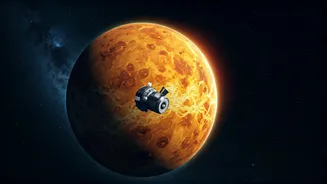
The exploration of exoplanets, or planets orbiting stars other than our Sun, is a core theme in sci-fi. Over the past few decades, astronomers have discovered thousands of exoplanets, using telescopes and advanced techniques to identify them. The James Webb Space Telescope provides new data about the atmospheres of exoplanets. The search for habitable planets, with the potential for liquid water and life, remains a key focus. Challenges include the vast distances involved and the limitations of current space travel technologies. Researchers are developing new methods for detecting and characterizing exoplanets. Also, they are improving our understanding of the conditions needed for life to emerge. As technology evolves, we can expect increased exploration, potentially leading to more discoveries.