




A Speedy Discovery
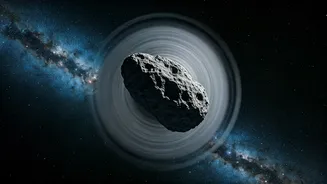
The Rubin Observatory made an astounding discovery, identifying a large asteroid that spins at an exceptionally fast rate. This achievement represents
a leap forward in understanding the characteristics of asteroids, a key area of study within astronomy. This newly observed asteroid's rapid spin presented a remarkable opportunity for scientists to gain new insights into the behavior and composition of such celestial bodies. The implications of this discovery are considerable, offering fresh data for astronomical models and an improved understanding of the solar system's history and dynamics. This discovery underscores the importance of ongoing space exploration and the value of advanced observation technologies such as those employed by the Rubin Observatory.
Unveiling the Details
The asteroid, characterized by its remarkably rapid rotation, caught the attention of astronomers due to its ability to complete a full rotation much faster than other asteroids of comparable size. The precise speed of this asteroid's rotation is a central focus of investigation, with scientists eager to determine how it has achieved such an extreme spin. Such rotational speed provides a window into the asteroid's internal structure and the various forces acting upon it, including any past collisions or interactions within the asteroid's formation. Researchers can use its rotational data to calculate its density and the distribution of mass. This allows researchers to analyze how asteroids behave under various influences, whether they are gravitational, collisional, or from solar radiation.
Spin and Composition
The asteroid's speedy rotation offers invaluable clues about its composition. The speed at which an asteroid spins is fundamentally related to its internal characteristics, such as its density, material, and structural integrity. For example, a rocky, solid asteroid would have the potential to withstand greater rotational speeds compared to a loosely consolidated space rock. Researchers will be able to estimate the asteroid's surface composition, whether it has metal content, or if it is mostly made of rock and ice. The spin also impacts the asteroid's surface appearance and distribution of materials. Through detailed examination, scientists hope to learn more about the makeup of the asteroid. The findings from this discovery will contribute to our evolving understanding of the asteroid's origins and its interactions within the solar system.
Observatory’s Methods
The Rubin Observatory's advanced capabilities played a critical role in observing this rapidly spinning asteroid. The observatory employs cutting-edge technologies that include advanced cameras and telescopes that are capable of monitoring the sky with remarkable sensitivity and resolution. This allows for detailed analyses of the light emitted and reflected by celestial objects, including asteroids. The ability to scan large areas of the sky frequently and rapidly is crucial. It also enables scientists to detect small changes in the brightness and position of asteroids over time. Advanced data analysis techniques are essential for turning raw observational data into useful scientific insights. The information gathered by the Rubin Observatory is used to create detailed models and simulations. This helps refine our understanding of space and how objects move within it.
Future Implications
The discovery of this fast-spinning asteroid holds profound implications for space exploration and the study of the solar system. The gathered data helps improve our understanding of asteroid formation, composition, and behavior. This research may assist with the planning of future missions to visit and explore asteroids. Knowing the properties of asteroids is essential for planetary defense and to safeguard Earth from potential impacts. Detailed studies could provide insights into resource extraction from asteroids. Understanding the nature and behavior of asteroids is important as it provides vital details about the history of the solar system, which in turn offers a deeper comprehension of how our planet and the other celestial bodies within the system came to be.