


Revolutionizing Urban Commutes
The Confederation of Indian Industry (CII) has put forth a groundbreaking proposal suggesting that air taxis could fundamentally alter urban transportation
dynamics. Their findings indicate that journeys spanning approximately 100 kilometers, which currently consume hours of road travel, could be completed in a matter of minutes. This innovation promises a significant reprieve for daily commuters battling notorious traffic congestion, offering a vision of future cities where travel time is dramatically compressed, allowing more time for productivity and leisure. The report emphasizes the potential to alleviate the strain on existing road networks by shifting a portion of traffic to the skies, thereby creating a more efficient and faster transit system for everyone, from everyday travelers to business professionals and airport-bound passengers.
The eVTOL Advantage
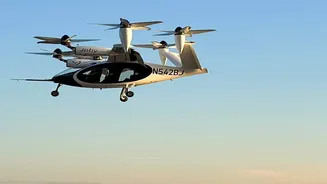
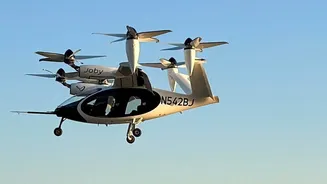
At the heart of this futuristic transport solution are electric vertical take-off and landing (eVTOL) aircraft, a type of electric flying vehicle designed for short-distance urban transit. These aircraft offer a cleaner, quieter, and more energy-efficient alternative to traditional helicopters. The CII report specifically models a pilot corridor linking Gurugram, Connaught Place, and the new Noida International Airport at Jewar, covering a distance of about 65 to 75 kilometers. By establishing this initial route, India aims to not only overcome its persistent traffic challenges but also position itself as a pioneer in the advanced air mobility sector. This initiative aligns with India's commitment to its Net-Zero 2070 goals, as the proposed eVTOLs are zero-emission vehicles, contributing to a more sustainable urban environment and cleaner air.
Saving Precious Time
For the average commuter, the allure of air taxis lies primarily in the immense time savings and unparalleled convenience they offer. The report projects that a journey from central Delhi to Gurugram, which presently takes anywhere from 1 to 1.5 hours by road, could be accomplished in under 12 minutes. Similarly, the travel time from Connaught Place to Jewar Airport could be reduced from a lengthy 2 to 3 hours to less than 20 minutes. These figures highlight the transformative impact air taxis could have on daily life, freeing up significant portions of time previously lost to traffic jams. This efficiency could boost economic activity and improve the overall quality of life for residents in congested metropolitan areas.
Infrastructure and Operations
The operational framework for air taxis involves specialized electric aircraft capable of vertical take-off and landing, operating from designated 'vertiports.' These compact hubs, envisioned for locations like rooftops, open spaces, hospitals, and existing transport nodes, would serve as the embarkation and disembarkation points. The establishment of a flagship air taxi route, as proposed for the Delhi-NCR region, is seen as a crucial step towards addressing traffic bottlenecks and solidifying India's leadership in advanced air mobility. This strategic positioning could attract further investment and development in the sector, paving the way for widespread adoption of these innovative aerial transit solutions across the nation.
Regulatory Hurdles Ahead
Despite the promising potential, the widespread implementation of air taxis faces significant regulatory hurdles that require careful consideration and resolution. The report explicitly states that robust safety regulations and clear governance frameworks are paramount before these services can become a reality. The Directorate General of Civil Aviation (DGCA) will be tasked with formulating new flight routes, establishing stringent safety standards, defining fire safety protocols, outlining emergency evacuation procedures, and designating obstacle-free zones. Furthermore, airspace restrictions in Delhi, particularly around sensitive areas like Delhi Cantonment and Lutyens' Delhi, necessitate meticulous planning of flight paths to ensure security and compliance with national capital regulations.
Beyond Commuting: Air Ambulances
The utility of air taxis extends beyond conventional passenger transport, with a significant potential application as air ambulances. The proposed network of vertiports could be strategically located at major hospitals, enabling faster and more efficient patient transfers between medical facilities. This capability is particularly crucial during emergencies, where rapid response can be life-saving. By leveraging eVTOL technology, medical teams could bypass ground traffic congestion, ensuring that patients receive critical care without delay. This integration of air mobility into healthcare services underscores the multifaceted benefits that advanced air transport can bring to urban life.
Future Expansion Plans
The success of the pilot project in the Delhi-NCR region is envisioned as a crucial stepping stone for the broader adoption of air taxi services across India. If the initial phase proves successful, the air taxi model could be systematically expanded to other major Indian metropolises, including Mumbai, Bengaluru, Chennai, and Hyderabad. This strategic rollout aims to usher in a new era of urban transportation, characterized by reduced travel times, enhanced efficiency, and improved safety. The long-term vision is one where citizens spend less time navigating congested streets and more time reaching their destinations swiftly and securely, fundamentally reshaping the way people experience city living.