





Hidden Reservoir Uncovered
For years, scientists have been aware of a curious phenomenon: the Earth seemed to be missing a significant amount of water. This mystery has finally been addressed
with the discovery of a vast, subterranean ocean located far below the surface. This hidden reservoir, previously undetected, has been found nestled beneath the seafloor, representing a significant shift in our understanding of the planet's water cycle. The ocean’s existence was not immediately apparent, as it resides at a depth that made direct observation difficult using standard methods. The revelation comes after years of research and the development of more advanced techniques.
Beneath the Surface
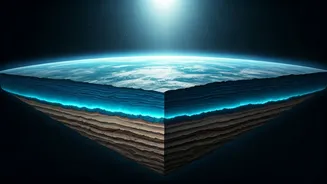
The newly discovered ocean is not like the familiar surface oceans; it is not a freely flowing body of water. Instead, it is locked within the Earth's mantle, specifically within a transition zone between the upper and lower mantle, at a depth of roughly 410 to 660 kilometers (255 to 410 miles) beneath the surface. The water is held within the mineral ringwoodite, which acts as a sponge, soaking up vast quantities of water. This discovery provides crucial insight into Earth's geological processes and water distribution, challenging previous models about the planet's composition and hydrology. Finding water in this deep layer signifies it’s an integral part of the earth’s structure, not just a surface feature.
Impact and Implications
The discovery of this subterranean ocean has significant implications. First, it offers a new perspective on Earth's water cycle and the quantity of water present on the planet. This newly found reservoir could contain as much water as all the surface oceans combined. Second, the existence of this water may influence the movement of tectonic plates and contribute to volcanic activity. The water within the mantle can lower the melting point of rock, potentially causing magma formation and volcanic eruptions. The discovery might influence how scientists measure the composition of the mantle and its role in the Earth’s evolution.
Future Research Awaits
The finding of this hidden ocean marks the beginning of a new chapter in Earth science research. Scientists are eager to further investigate the characteristics of the deep-seated water and its interaction with the Earth's mantle. This includes studying the chemical composition of the water, its role in geological processes, and its potential impact on the planet's climate. New technologies and research methods will be required to study the hidden ocean. The exploration of this underground reservoir will likely keep scientists busy for many years, as they continue to learn about our planet. Further research could also provide insight into the potential for water elsewhere in our solar system.