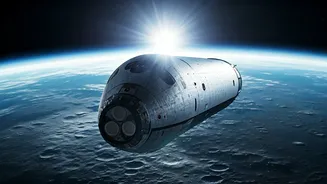







Artemis 2: The Goal
The Artemis 2 mission, poised to launch soon, represents a significant stride in NASA's ambitious lunar exploration program. This mission is not designed
for a landing on the Moon, but instead serves as a crucial test flight of the Orion spacecraft and the Space Launch System (SLS) rocket. Its primary aim is to transport astronauts beyond the Earth's orbit, validating the systems and procedures that are critical for long-duration space travel. This mission will pave the way for subsequent Artemis missions, including the highly anticipated Artemis 3, which aims to land humans on the Moon for the first time since the Apollo era. The success of Artemis 2 is foundational for establishing a sustained human presence on the Moon and further exploration of the solar system.
Astronauts: Ready to Fly
Astronauts are undergoing rigorous training and preparation for the Artemis 2 mission. This specialized training includes simulations that replicate the harsh conditions of space, practice in operating the Orion spacecraft, and emergency response drills. The astronauts are honing their skills in a variety of areas, from navigating the spacecraft and conducting scientific experiments to maintaining their health and well-being in the challenging environment of space. The mission demands a high level of teamwork, with astronauts collaborating closely with ground control to ensure the mission's success. The crew's training involves understanding the complex systems of the spacecraft, performing spacewalks in simulated environments, and learning to adapt to the psychological stresses of long-duration spaceflight. The astronauts' preparedness is crucial, reflecting the extensive efforts and dedication that will enable them to execute the mission effectively.
Testing Space Hardware
Artemis 2 will rigorously test critical components of the Orion spacecraft and the SLS rocket, which are vital for future deep space exploration. The mission will simulate the environment and operational demands of a lunar journey, exposing the hardware to the radiation, temperature fluctuations, and vacuum of space. Engineers and mission controllers will analyze the performance of the life support systems, propulsion, navigation, and communication technologies during the mission. The data collected from Artemis 2 will inform vital improvements for subsequent Artemis missions, guaranteeing the safety of crew and boosting the reliability of the spacecraft. These tests will provide crucial insights into how the spacecraft functions in the space environment, pinpointing any design flaws and ensuring the safety and operational efficiency of future lunar missions.
Beyond Earth's Orbit
Artemis 2 will take astronauts beyond Earth’s orbit, offering a valuable opportunity to assess the long-term effects of space travel on the human body and gather critical data for future deep space missions. The crew will be exposed to the unique challenges of a lunar journey, helping scientists and engineers understand the impacts of prolonged space exposure. They will use specialized equipment to monitor the physiological responses of the crew, including changes in bone density, muscle mass, and cardiovascular health. The data collected will improve safety protocols and equipment for future missions, including the proposed mission to Mars. By examining the physiological and psychological effects of long-duration spaceflight, the mission paves the way for deeper understanding of human adaptability and resilience in the vastness of space.
Shaping Future Missions
The Artemis 2 mission is a stepping stone for future explorations, including the Artemis 3 mission, which plans to return humans to the lunar surface. The knowledge gained from Artemis 2 will drive significant improvements in spacecraft design, mission planning, and astronaut training protocols. The data gathered from the mission will aid scientists and engineers in refining technologies for lunar surface activities and planning subsequent missions. The results will contribute to the development of sustainable, reusable spacecraft. Artemis 2 plays a pivotal role in the broader vision of human space exploration, establishing the foundations for a sustained presence on the Moon and opening doors to further ambitious missions to other celestial bodies, including Mars.