






The Genesis of TeraFab
Elon Musk's vision extends beyond terrestrial advancements with the announcement of TeraFab, a revolutionary chip manufacturing facility that integrates
Tesla, SpaceX, and xAI. This monumental project is driven by a singular, grand objective: to engineer the infrastructure for a 'galactic civilization' and, in doing so, pave a path toward a unique form of human immortality by preserving memories and ideas across generations. Musk articulated this vision during a presentation at the Seaholm Power Plant in Austin, Texas, emphasizing the unprecedented scale of AI computation required for future multi-planetary endeavors. He highlighted that existing chip production capabilities are insufficient to meet these burgeoning demands, necessitating a dedicated, in-house manufacturing solution of immense capacity.
TeraFab's Scope and Scale
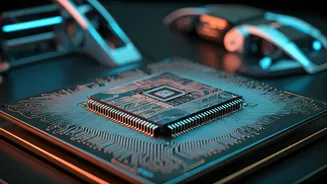
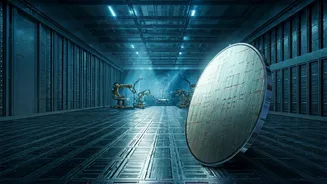
At its core, TeraFab is envisioned as a comprehensive semiconductor fabrication plant spearheaded by Tesla, with significant contributions from SpaceX and strategic integration with xAI. The projected investment for this endeavor ranges from $20 billion to $25 billion. Upon full operational capacity, the factory is slated to produce an astounding 100 to 200 billion advanced 2-nanometer AI chips annually, a volume that far surpasses the output of most contemporary semiconductor fabs. This substantial chip production is intended to power a diverse array of applications, from the sophisticated AI systems within autonomous Tesla vehicles and the Optimus humanoid robot to expansive AI data centers situated in extraterrestrial environments. A key innovation of TeraFab is its integrated approach, bringing nearly every facet of chip creation—including logic chips, memory, packaging, testing, mask design, and iterative redesign processes—under one roof, rather than relying on dispersed, specialized facilities.
Chips for Earth and Beyond
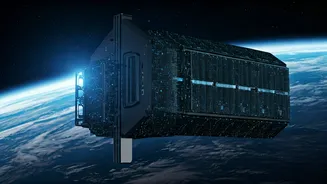
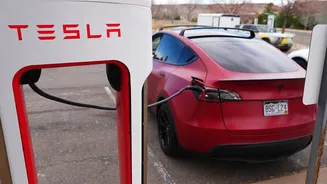
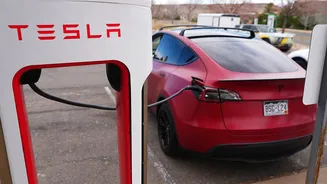
The chips manufactured by TeraFab will serve two primary strategic purposes, each critical to Musk's long-term vision. The first category is tailored for Tesla's product lines, with a particular focus on autonomous driving systems and the burgeoning Optimus humanoid robot. Musk has indicated that the potential production volume for Optimus could eventually eclipse that of Tesla's vehicles, underscoring the necessity for a massive and consistent supply of custom AI processors to enable this scaling. The second, critically important category comprises specialized processors designated as D3, meticulously engineered for the rigors of space environments. These chips are destined for deployment in orbital AI data centers, which SpaceX plans to launch utilizing its Starship rockets. Musk posits that conducting AI operations in space could prove more cost-effective than terrestrial equivalents, largely due to the uninterrupted solar energy availability for satellites, a significant advantage over the power constraints faced by ground-based data centers.
The Cosmic Computing Frontier
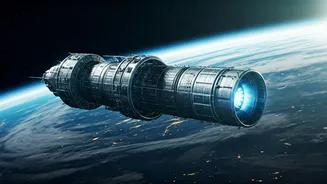
As the cost of launching hardware into space continues to decline, Musk asserts that establishing computing infrastructure in orbit becomes the next logical and inevitable step for technological progression. He remarked that once orbital launch costs become sufficiently low, the prospect of deploying AI in space transforms into an 'extremely compelling' and ultimately 'no-brainer' proposition. This orbital infrastructure would likely involve extensive networks of AI-powered satellites, each equipped with substantial solar arrays capable of generating around 100 kilowatts, with future iterations designed for even greater power output. Furthermore, the migration of massive AI data centers to space addresses critical energy concerns. Terrestrial data centers demand enormous amounts of electricity, robust cooling systems, and significant land resources, often encountering logistical and societal hurdles. In contrast, space-based computing promises an 'abundance' of energy derived from the sun, facilitating virtually unlimited scalability for AI operations without the environmental and logistical constraints of Earth.