
A Desert's Paradox
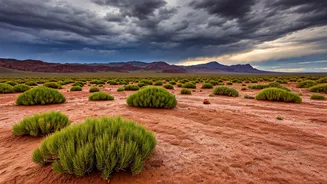
The Atacama Desert in northern Chile is globally acknowledged as the driest non-polar desert. Its profound aridity has etched a landscape of stark beauty,
where the absence of water shapes every facet of existence. The region receives less than 1 millimeter of rainfall annually in many areas, creating a scenario where life's presence seems improbable. Yet, the Atacama is not devoid of life; instead, it hosts a surprisingly resilient and diverse array of organisms. This resilience underscores nature's capability to colonize even the most inhospitable environments. The desert's unique climate, including intense solar radiation and significant temperature fluctuations, adds to the challenge. The scientific community has been fascinated by the Atacama and its inhabitants, with ongoing research that seeks to understand their adaptations to these conditions.
Life's Adaptations: Plants
Plants in the Atacama have ingeniously adapted to extract every resource available in their environment. Many species have developed extensive root systems, capable of reaching deep into the earth to find underground water sources. Some plants also feature specialized structures designed to capture moisture from fog and condensation. For instance, some cacti have evolved to store water within their tissues, allowing them to endure long periods without rainfall. Other plants have evolved small leaves or reduced leaf surfaces to minimize water loss through transpiration, the process of water evaporation from the plant’s surface. Additionally, many desert plants have a waxy coating on their leaves and stems, further reducing water loss. These remarkable adaptations demonstrate how plant life has optimized its survival in this water-scarce environment, showcasing incredible evolutionary strategies.
Surviving Animals: Fauna
Animal life in the Atacama has also adapted remarkably to thrive within this environment. Many animals are nocturnal, avoiding the intense daytime heat and conserving water. Others have developed physiological mechanisms to extract water from their food or even the air. Various insects, reptiles, and mammals have adapted specific behaviors to cope with this challenging landscape. For example, some insects have developed exoskeletons that reduce water loss. Several species of lizards have adapted to efficient foraging strategies, minimizing energy expenditure, as the desert offers few energy resources. The animals often employ behaviors to regulate their body temperature, such as burrowing underground or seeking shade. These remarkable adaptations, both physiological and behavioral, showcase the incredible ability of animals to persist and flourish in an extremely challenging environment, highlighting the resilience of life in the face of adversity.
Geological and Climatic Factors
The Atacama’s unique geological and climatic conditions are the basis of its exceptional aridity and the character of its ecology. The presence of the Andes Mountains is a key factor, as it blocks moisture-laden clouds from the east, creating a rain shadow. The Humboldt Current, a cold ocean current off the coast, further contributes to the desert's aridity, cooling the air and reducing the likelihood of rainfall. The high elevation of the Atacama also has an impact, causing reduced air humidity, intensifying the solar radiation. Mineral-rich soils, formed through volcanic activity and weathering, provide unique habitats for specific plant species. The combination of these geological and climatic elements has resulted in an environment with high salt concentrations and extreme temperatures, contributing to a harsh but unique ecosystem.
Ongoing Research and Discoveries
The Atacama Desert is a significant focus of scientific study, with scientists continually uncovering new insights into its ecology and life forms. Researchers investigate how plants and animals survive extreme conditions and the unique evolutionary paths they have taken. The extreme environment of the Atacama serves as an analogue for conditions on other planets, inspiring studies of astrobiology and the potential for life beyond Earth. Scientists are particularly interested in the desert's microbial life, which has been shown to contain extremophiles, microorganisms that thrive in extreme conditions. The examination of these extremophiles reveals how life can survive and adapt in such challenging circumstances and possibly provides information on life's evolution on Earth and in space. Research also focuses on the impact of climate change and human activities on this fragile ecosystem. Such studies seek to provide a better understanding of the desert's biodiversity and conservation strategies.