





Uniting Ambitious Ventures
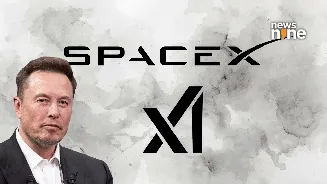
Elon Musk has orchestrated a significant consolidation of his business empire, integrating his pioneering space exploration company, SpaceX, with his artificial
intelligence venture, xAI. This strategic union is poised to amplify Musk's influence and capabilities across two of the most transformative technological frontiers of our time. The stated objective behind this acquisition is to foster a synergistic relationship between rocketry and artificial intelligence, positioning Musk at the forefront of both sectors. This grand vision encompasses not only advanced AI development but also the integration of his other key businesses, including the global satellite internet service, Starlink, and the popular social media platform, X. The overarching goal is to leverage these combined entities to achieve unprecedented advancements and potentially secure a dominant market position in the rapidly evolving tech landscape.
Space-Based AI Vision
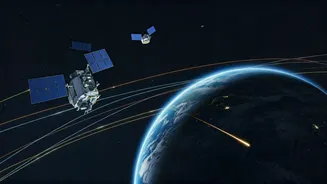
A cornerstone of this merged entity's strategy is Elon Musk's conviction that the future of large-scale AI operations lies beyond Earth. He believes that establishing data centers in space offers a compelling solution to the escalating costs and resource constraints associated with running massive AI systems on our planet. Musk has repeatedly highlighted the economic and logistical advantages of harnessing the constant solar energy available in space. He projects that within the next two to three years, generating the computational power needed for AI will become significantly more cost-effective in orbit. This forward-thinking approach places the combined SpaceX and xAI in direct competition with other tech giants like Google, which is also exploring similar avenues with projects like Project Suncatcher, aiming to deploy AI-equipped solar-powered satellites. However, Musk's aggressive timeline and vision for ubiquitous space-based AI supercomputers stand apart from the more cautious perspectives of some industry leaders, such as Microsoft's president, Brad Smith, who has expressed skepticism about migrating data centers from Earth to low-Earth orbit.
Competition and Origins
The establishment of xAI itself was significantly influenced by Musk's interactions and differing philosophies regarding artificial intelligence development, particularly with OpenAI, a company he co-founded. His dissatisfaction with the direction of OpenAI appears to have been a primary catalyst for launching xAI in 2023, with the express purpose of creating an alternative AI, notably embodied by the chatbot Grok. This move places Musk in direct competition within the highly dynamic AI arena, where rivals like OpenAI are also pursuing ambitious growth strategies, including their own initial public offerings. Furthermore, Musk's operational playbook often involves merging or acquiring related businesses. A notable precedent is Tesla's acquisition of SolarCity a decade ago. More recently, xAI acquired his social media platform, X (formerly Twitter). The financial backing for these ventures is substantial, with Tesla announcing a significant $2 billion investment in xAI, underscoring the interconnectedness and strategic importance of these companies within Musk's broader portfolio.
Broader Ambitions and Investments
The strategic alignment of SpaceX and xAI is part of a larger pattern of Musk's efforts to consolidate his various enterprises, fueling speculation on Wall Street about the potential formation of a monolithic 'Musk Inc.' Some observers even anticipate a possible merger between Tesla and SpaceX. Musk's considerable wealth, estimated at $768 billion by Forbes, supports these expansive endeavors, which also include ventures like Neuralink, focused on brain-computer interfaces, and The Boring Company, dedicated to tunnel construction. While the specific financial terms of the SpaceX acquisition of xAI remain undisclosed, the investment landscape surrounding these companies is notable. A fund associated with Donald Trump Jr., 1789 Capital, has reportedly invested over $1 billion in various Musk companies, including SpaceX, xAI, and X, though some of these investments have since been divested. Beyond the space-based AI ambitions, xAI is also actively expanding its terrestrial operations, with plans for a massive $20 billion data center, codenamed MACROHARDRR, near Mississippi's border with Tennessee. This facility, likely a playful jab at Microsoft, would be the third in the greater Memphis area. Ultimately, Musk envisions this consolidated entity playing a crucial role in his long-held aspiration of enabling humanity to colonize other planets, providing a safeguard against potential existential threats on Earth and ensuring the long-term survival of consciousness.