




Apara Ekadashi's Divine Timing
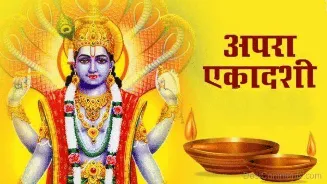
In the Hindu calendar, Ekadashi signifies a highly auspicious day dedicated to Lord Vishnu, occurring twice monthly. Apara Ekadashi specifically falls
on the eleventh day of the Krishna Paksha during the month of Jayeshtha. For the year 2026, this sacred day is scheduled for May 13th. The Ekadashi tithi commences on May 12, 2026, at 02:52 PM and concludes on May 13, 2026, at 01:29 PM. The crucial 'Parana' time, when the fast is broken, is set for May 14, 2026, from 05:31 AM to 08:14 AM. The Dwadashi tithi ends on May 14, 2026, at 11:20 AM, marking the completion of the observance period. Understanding these precise timings is essential for devotees aiming to observe the fast with utmost devotion and adherence to tradition.
Spiritual Significance Explained
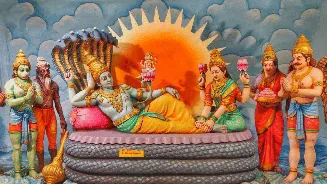
Apara Ekadashi holds immense spiritual weight, often referred to as 'infinite' or 'unlimited', reflecting the boundless blessings it bestows. Lord Krishna himself elucidated its importance to Yudhishthir, highlighting its role in overcoming formidable challenges, even influencing the outcome of the Mahabharata war. Observing this fast with sincerity is believed to purify one's mind, body, and spirit, offering protection from negative influences and transgressions. Devotees who undertake this rigorous fast and offer heartfelt prayers to Lord Vishnu are said to receive fulfillment of their desires, leading to happiness, health, and prosperity. It is also believed that such devotion can lead to a sacred abode in Vaikunth Dham, Lord Vishnu's divine residence, signifying ultimate liberation.
Observance and Puja Rites
The observance of Apara Ekadashi involves a series of devotional acts aimed at pleasing Lord Vishnu. It typically begins with a purifying holy bath, ideally during the Brahma Muhurat. Following this, devotees prepare idols of deities like Laddoo Gopal Ji, Lord Krishna, and Lord Vishnu for a sacred bath. A lamp (diya) lit with pure ghee is placed near an idol of Lord Vishnu, which is often positioned on a wooden plank. The idol is then adorned with yellow sandalwood (chandan) tilak, a garland of yellow flowers, and offered 'Panchamrit' – a mixture of five Nectars. Devotees then engage in chanting the mantra "Om Namo Bhagavate Vasudevaye" 108 times, accompanied by offerings of Tulsi leaves, seasonal fruits, and dry fruits. Reciting the Lord Vishnu Aarti and seeking blessings at a Vishnu temple are also integral parts of the ritual. For those who find strict fasting challenging, consuming Sattvik food in the evening of the Dwadashi day is permissible.