






Moonshot Chip Dream
A visionary Japanese engineer harbors an extraordinary ambition: to establish computer chip manufacturing facilities on the Moon. This audacious goal is spearheaded
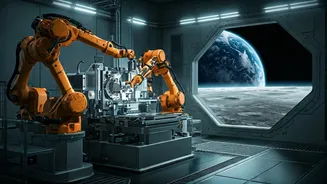
by Atsuyoshi Koike, the driving force behind Rapidus, a tech enterprise established in 2022 with substantial government backing. The company is dedicated to revitalizing Japan's standing in the global semiconductor market. While Rapidus intends to begin mass production of state-of-the-art microchips domestically as early as next year, Koike's long-term perspective includes the possibility of lunar chip fabrication becoming a reality in the 2040s. His rationale for this celestial manufacturing concept stems from the Moon's exceptionally low gravity and its inherent vacuum, conditions he believes are ideal for the production of highly sensitive electronic components, potentially leading to greater efficiency and fewer defects. Koike emphasizes the importance of demonstrating tangible results, stating, 'I'm thinking about it very seriously. Of course, I like to show the great future, the big dream. But we have to show the actual data, the actual result. That is the key for my company.'
2nm Chip Breakthrough
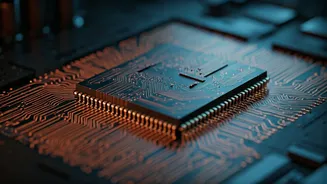
Rapidus has achieved a significant milestone by successfully developing its inaugural 2-nanometer prototype chip. This groundbreaking achievement was made possible through technology co-developed with the American tech giant IBM. These sophisticated 2-nanometer chips represent the pinnacle of current technological capability, serving as the backbone for a wide array of advanced applications, including artificial intelligence data centers, next-generation smartphones, and autonomous driving systems. However, the creation of a prototype is merely the initial step in a long and complex journey. Presently, only a select few global industry leaders, such as Taiwan's TSMC and South Korea's Samsung Electronics, possess the capacity for such intricate manufacturing. Rapidus acknowledges the substantial challenges ahead but remains optimistic. Koike believes the company's competitive edge will lie in its remarkable speed, a key differentiator in the high-stakes semiconductor race.
Express Chip Delivery
Rapidus is poised to revolutionize chip delivery with an innovative approach to manufacturing timelines and pricing. Typically, semiconductor fabrication plants, known as 'fabs,' process silicon wafers in large batches, moving them sequentially through various intricate stages to construct chips layer by painstaking layer. In contrast, Koike outlines a significantly different strategy for Rapidus: processing each wafer individually and without delay. The company's ambitious target is to drastically reduce the manufacturing duration from the industry standard of 50 days down to an unprecedented 15 days. To incentivize this rapid turnaround, Koike intends to implement a premium pricing model, humorously likening it to the cost of Japan's renowned Shinkansen high-speed rail. He remarked, 'I get a Shinkansen fee.' Furthermore, Koike reflected on past missteps in the Japanese chip industry, identifying a period of excessive isolation and a failure to forge early partnerships with American firms as a critical error. To rectify this, Rapidus engineers are currently undergoing intensive training alongside IBM experts in New York, forging crucial international collaborations.