





Accusation of Silence
West Bengal's Chief Minister, Mamata Banerjee, has publicly voiced her strong disapproval of Prime Minister Narendra Modi's perceived lack of response
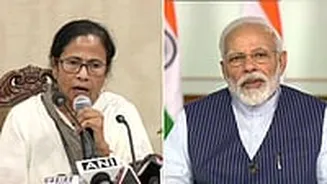
to a significant security threat issued by Pakistan. During a political gathering in the Nadia district, Banerjee directly challenged the Prime Minister, stating that while he frequently targets Bengal during election campaigns, he remained conspicuously silent when Pakistan made a direct threat to strike Kolkata. She articulated her stance by saying, "You (PM) target Bengal during election rallies; but when Pakistan talks of attacking Bengal, you do not utter a word. You should resign." This pointed critique aimed to highlight what she viewed as a dereliction of duty by the central government in addressing a direct menace to a major Indian city.
Questioning the Response
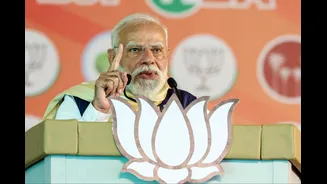
Further elaborating on her concerns regarding the central government's approach to national security, Mamata Banerjee posed a series of pointed questions directed at Prime Minister Modi. She specifically questioned the rationale behind the Prime Minister not addressing this critical issue during his recent rally held in Cooch Behar, West Bengal. Banerjee asked, "Why did the prime minister not raise the issue during his rally in Bengal? When Pakistan's defence minister says they will attack Kolkata, why didn't the prime minister say that 'we will take strong action'?" This line of questioning underscored her expectation that the Prime Minister should have unequivocally condemned the threat and assured swift retaliatory action, rather than remaining silent on such a serious matter.
Unwavering Stance
Mamata Banerjee firmly asserted that any threats, whether directed at the nation as a whole or specifically at her state, would be met with resolute opposition. She declared, “Just like we do not accept any threat to the country, we will also not take the threat to Kolkata lying down.” This statement emphasized her commitment to defending West Bengal and its citizens, drawing a parallel between the imperative to safeguard the entire nation and the specific need to protect Kolkata from external aggression. Her resolve indicates a refusal to yield to intimidation and a commitment to stand firm against any attempts to destabilize or threaten the region.
Pakistan's Threat
Banerjee's pointed remarks were made in the wake of a statement from Pakistan's Defence Minister, Khawaja Asif. Asif had issued a warning that Islamabad would retaliate with a strike on Kolkata if India were to engage in any 'future misadventure.' He was quoted as saying to reporters in Sialkot, “If India tries to stage any false flag operation this time, then God-willingly, we will take it to Kolkata.” This statement from a high-ranking Pakistani official escalated the already tense relations between the two neighboring countries, adding a new layer of concern regarding potential cross-border provocations.
Escalating Tensions
The exchange of strong warnings between India and Pakistan has intensified in recent months, contributing to a heightened state of alert. In response to India's firm stance on cross-border threats, Asif had previously characterized Pakistan's potential reaction as 'swift, calibrated and decisive.' India, in turn, has consistently maintained its position that it will respond decisively to any cross-border threat, while also emphasizing its policy of not differentiating between terrorist organizations and those who provide them with support. This ongoing diplomatic and military posturing has created a volatile environment in the region.