
Why Nanodose?
Nanodosing involves delivering substances in incredibly small, precisely measured doses. This method is gaining traction because it offers enhanced efficacy
and safety compared to conventional approaches. When dealing with natural compounds, such as those found in thyme, nanodosing can significantly boost their bioavailability. Bioavailability refers to the proportion of a substance that enters the bloodstream and becomes active. By encapsulating these compounds at the nanoscale, scientists can ensure better absorption, which means that the body is able to utilize a larger percentage of the beneficial components. This also reduces the risk of adverse side effects, as lower doses are used. Precise nanodosing minimizes variability in response, allowing for a more predictable and controlled therapeutic effect. Overall, nanodosing represents a shift toward more personalized and effective treatments.
Microdroplet System Unveiled
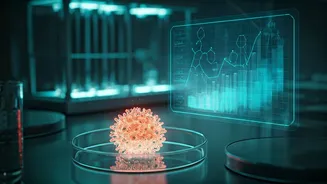
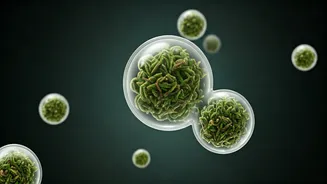
The microdroplet system is at the heart of this innovation, providing a controlled environment for encapsulating active compounds. The process begins with the creation of tiny droplets, each containing a measured amount of thyme extract. These droplets, often measured in micrometers or nanometers, are then encased in a protective shell, ensuring their stability and controlled release. The shell is carefully chosen for its compatibility with the human body and its ability to protect the thyme extract from degradation. This technique is similar to how a traditional pharmaceutical capsule works, but on an incredibly smaller scale. The microdroplet system ensures that the active components are efficiently delivered to the desired target areas in the body. The encapsulation process also shields the thyme compounds from factors like light, oxygen, and enzymes, all of which can affect potency. Furthermore, it aids in controlling the release rate, guaranteeing a prolonged and consistent effect.
Thyme Extract's Challenges
Traditional thyme extract faces several hurdles that limit its effectiveness. One common issue is the poor bioavailability, as many of the beneficial compounds are not easily absorbed by the body. This inefficiency often leads to the need for higher doses, increasing the risk of side effects. Another challenge is the extract's instability. The active compounds in thyme can be sensitive to environmental factors like light and air, which can diminish their potency over time. The delivery method is also a problem, as standard extracts can be quickly metabolized by the body, limiting their therapeutic effect. These practical issues have hindered the broader application of thyme's health benefits. Nanodosing technology addresses these issues by improving the absorption, stability, and delivery of thyme compounds, thus overcoming the limitations of conventional methods and making thyme extract a more promising therapeutic option.
Nano-Encapsulation Technique
The encapsulation of thyme at the nanoscale involves advanced scientific methods. The most common technique is the use of microfluidic devices to produce nano-sized droplets containing the thyme extract. These droplets are then coated with a protective layer, usually a biocompatible polymer. This method ensures that each particle has a consistent size and composition. Alternatively, scientists may utilize self-assembly techniques, where the active compounds spontaneously organize into nanoscale structures. These methods rely on the principles of chemistry and materials science. This technology is incredibly precise, allowing for the precise control of the size, shape, and composition of the nanocapsules. The result is a stable and effective delivery system that protects the thyme extract, enhances its bioavailability, and allows for controlled release. The final product is a highly refined formulation, poised to unlock the full potential of thyme's therapeutic benefits.