





The Silent Infiltration
For a long time, advanced AI systems like those powering facial recognition or autonomous vehicles were thought to be secure, akin to impenetrable black
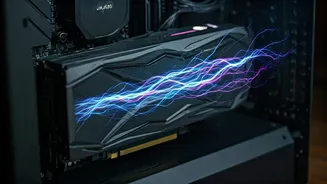
boxes. However, new research from a KAIST-led team shatters this assumption. They've demonstrated a method for reverse-engineering AI models remotely, not by hacking into the system itself, but by passively capturing faint electromagnetic signals that naturally emanate from the hardware during operation. This technique, dubbed ModelSpy, uses a small, easily concealable antenna to pick up these subtle traces produced by GPUs. These emissions, though faint, contain patterns directly related to the AI model's underlying architecture and how it processes information. By analyzing these electromagnetic 'whispers', researchers were able to reconstruct crucial aspects of the AI model's design, achieving an astonishing accuracy rate of up to 97.6 percent in identifying core structures. This breakthrough means that the computation process itself becomes a source of vulnerability, exposing system designs without any traditional breach.
Unmasking the Architecture
The ModelSpy system operates by meticulously collecting the electromagnetic output that GPUs generate while executing AI workloads. These signals, while seemingly insignificant, are not random; they exhibit specific patterns intricately linked to the hardware's configuration and the computational tasks being performed. The research team developed sophisticated analytical techniques to decipher these patterns, allowing them to infer critical design elements of the AI model. This includes details about the arrangement of its neural network layers and the precise choices made regarding its parameters. The implications of this method are profound because it bypasses conventional security measures that focus on software vulnerabilities or network access. The tests conducted confirmed the effectiveness of ModelSpy, with the ability to capture these emissions from a distance of up to six meters, even through solid walls and across a variety of different GPU models. This 'listening' approach transforms the physical side-effects of computation into a potent tool for model exfiltration, demonstrating a new paradigm in AI security threats.
A New Frontier in Security
This discovery thrusts AI security into uncharted territory, moving beyond the familiar landscape of software exploits and network intrusions. ModelSpy's innovation lies in its exploitation of the physical byproducts of computation, rather than the digital data itself. This means that even AI systems operating in complete isolation, disconnected from any network, can still be vulnerable if their hardware emissions are not carefully managed. For organizations, the architectural design of their AI models often represents significant intellectual property and a key competitive advantage. Therefore, ModelSpy presents a direct and substantial business risk, potentially leading to the theft of proprietary technology. The research frames this as a complex cyber-physical challenge, where effective AI defense now necessitates a holistic approach that combines robust digital safeguards with diligent control over the surrounding physical environment. This significantly elevates the bar for what constitutes comprehensive protection in the AI era.
Fortifying the Defenses
In response to this emerging threat, the research team has also proposed several countermeasures to mitigate the risks posed by ModelSpy. These proposed solutions include strategies like introducing electromagnetic noise into the system's operational environment, effectively drowning out the subtle signals that an attacker would try to capture. Additionally, they suggest modifying the way computations are executed to disrupt the discernible patterns, making it far more difficult for an adversary to interpret the electromagnetic output. These defensive strategies point towards a broader evolution in AI security, one that may require hardware-level adjustments in addition to traditional software updates. Implementing such changes could prove challenging for industries heavily invested in existing hardware infrastructure. The significance of this research has already been acknowledged at a major security conference, underscoring the seriousness with which this threat is being regarded. The future of AI security may well involve defending against attacks that don't 'break in' digitally, but rather passively 'observe' what systems unintentionally reveal through their physical operations.