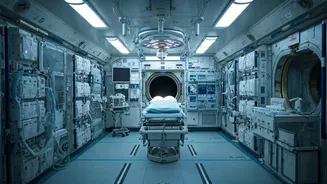

Astronaut Medical Training
Astronauts undergo rigorous medical training long before they ever set foot in space. This training is absolutely crucial, given the absence of immediate
access to hospitals or emergency medical services. They are extensively educated in a range of medical fields, including advanced cardiac life support, basic trauma management, and various other emergency procedures. This intense preparation equips them to handle a diverse array of medical situations that could occur during their missions. They become proficient in treating injuries, administering medications, and performing diagnostic tests using the onboard medical equipment. The training simulates real-life medical emergencies to prepare them for the unexpected. Astronauts constantly refresh their medical skills through periodic retraining and simulation exercises while in space. Their ability to handle medical issues solo or with the support of the mission control team on Earth can mean the difference between life and death. This extensive medical education and ongoing training is an integral part of preparing astronauts for the hazards of space, ensuring they are as ready as possible for any health-related challenges they might face during their missions in the ISS.
Onboard Medical Equipment
The ISS is equipped with a comprehensive medical kit, similar to what you might find in a small clinic or hospital. This includes a wide array of medications, ranging from antibiotics and pain relievers to specialized drugs needed for more severe conditions. It has diagnostic tools such as ultrasound machines, blood analysis devices, and electrocardiogram (ECG) machines. These tools allow the crew to monitor the health of the astronauts and diagnose a variety of medical issues. Furthermore, the ISS has advanced life support equipment. It also features defibrillators for cardiac emergencies, ventilators for respiratory support, and surgical instruments that allow them to perform necessary procedures. The medical supplies are regularly updated, keeping the onboard resources fresh and effective. The medical equipment is designed to be versatile, so the astronauts can handle a broad spectrum of medical problems. The inclusion of an extensive and regularly updated medical kit is fundamental in enabling astronauts to deal with medical emergencies far from Earth.
Emergency Procedures Protocols
Specific protocols are followed to address diverse medical emergencies in space. These protocols begin with immediate assessment and diagnosis. The astronaut-medics use their training and the available medical equipment to evaluate the patient's condition. Next is consultation with medical experts on Earth via radio communication. A team of doctors and specialists on Earth provides advice, guidance, and assistance in real time. This remote support is essential, giving the astronauts access to expertise far beyond what is available on the ISS. The crew can then proceed to administer treatment based on the diagnosis and the instructions received from the Earth-based medical team. This treatment may include administering medication, performing medical procedures, or providing supportive care. In severe cases, emergency evacuation is a possibility. The ISS has a return plan for the astronauts in the event of an emergency. This involves preparing the spacecraft for immediate return to Earth. All the processes are well-structured and continually updated to enhance crew safety and care, acknowledging the inherent challenges of practicing medicine in space and the imperative to deliver effective medical aid.
Challenges in Space Medicine
Space presents distinct medical challenges that add complexity to handling emergencies. The absence of gravity, for example, affects the human body in several ways, and astronauts can experience bone density loss and muscle atrophy. This demands specific medical care and rehabilitation. The confined environment of the ISS raises concerns about the spread of diseases. Infections can spread rapidly. Astronauts need to be vigilant about personal hygiene and disease prevention. Remote communication with medical experts on Earth introduces delays and can sometimes be challenging due to limitations in communication bandwidth. The unique psychological stresses of spaceflight, including isolation, can affect astronauts' mental health. This also demands proper mental health support and intervention. Therefore, managing medical emergencies in space means dealing with these challenges and adapting procedures to the specific environment. Continuous research and development of countermeasures for these challenges continue to be of high importance for the well-being and health of astronauts on the ISS.