








Brain Organoids' Origins
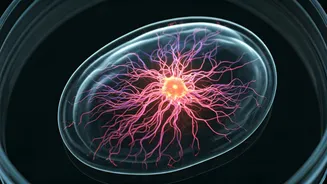
Brain organoids, miniature models of the human brain, have become an invaluable tool for neuroscientists. These three-dimensional structures are grown
in the lab from human stem cells. The creation of these organoids involves a sophisticated process where stem cells are coaxed to develop into various brain cell types, such as neurons and glial cells. These cells then self-organize, forming complex structures that mimic the architecture of the human brain. Scientists use special growth factors and conditions to guide this process, allowing them to study brain development and diseases in a controlled environment. This technique allows researchers to explore aspects of the brain that would be impossible to study in vivo.
Wiring the Brain
The primary focus of research utilizing brain organoids is understanding how the brain wires itself. This is an incredibly complex process, involving billions of neurons finding their correct connections. Scientists are particularly interested in the guidance cues that tell these neurons where to go and how to connect. The use of brain organoids allows scientists to visualize this intricate process in real time and also to study the effects of genetic mutations or environmental factors on brain wiring. Studies are focusing on axonal guidance, where the axons of neurons navigate through the brain to find their specific targets, and how the formation of synapses, the connections between neurons, is regulated. This research is paving the way for a deeper understanding of neural circuit formation and of how this process can go wrong, leading to neurological disorders.
Insights into Diseases
The study of brain organoids provides critical insights into neurological disorders. These mini-brains enable researchers to model diseases like Alzheimer's, autism spectrum disorder, and schizophrenia. By introducing genetic mutations associated with these conditions into the organoids, scientists can observe how these mutations affect brain development and function. They can then study how these changes impact neuronal connectivity and cellular function within the organoid. This approach facilitates the testing of potential therapeutic interventions, and by observing the effects of drugs on these miniature brain models, researchers can screen for treatments that could potentially be effective in humans. Thus, these organoids allow for more ethical and precise drug testing.
Advantages of Organoids
Brain organoids offer several advantages over traditional methods of studying the brain. The ability to observe human brain tissue outside of the body gives a much better understanding of the intricacies of the brain. They provide a human-specific model, eliminating the need to extrapolate data from animal studies, allowing for far more relevant findings. Organoids also allow for detailed studies of brain development over extended periods. Researchers can also control the environment in which the organoids are grown, allowing them to isolate and study the effects of specific factors. The use of these advanced tools promotes ethical research by reducing reliance on animal testing and opening up novel avenues for personalized medicine approaches. Furthermore, brain organoids can be produced relatively quickly, providing an abundance of data.
Future Directions and Impact
The field of brain organoid research is rapidly evolving. As the technology continues to advance, scientists are exploring new ways to make organoids even more sophisticated, including incorporating blood vessels and other brain components. A growing focus is on creating more realistic models, which will provide an even deeper insight into brain function and dysfunction. The findings from this research have the potential to transform the treatment of neurological diseases. Scientists aim to develop personalized therapies based on a patient’s specific genetic makeup and the unique characteristics of their brain cells. Ultimately, brain organoids may lead to earlier diagnoses and more effective treatments for some of the most challenging neurological conditions. The impact of this research is poised to revolutionize the world of neurosciences and medicine.