






ARM's Strategic Shift
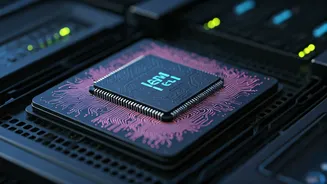
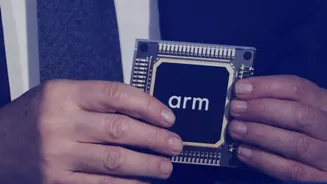
After more than three and a half decades of exclusively licensing its chip designs, ARM has taken a significant leap by developing its very own processor.
This marks a pivotal moment for the venerable British technology company, which has traditionally profited by providing blueprints to industry giants like Apple and Nvidia, earning royalties on each chip produced using its architecture. However, with the advent of the AGI CPU, ARM is now venturing directly into the competitive realm of chip manufacturing. This bold move places the company in closer contention with some of its most established partners, signifying a strategic pivot to capitalize on the escalating demand for AI-driven computing power and the infrastructure needed to support it. The company's decision reflects a proactive response to the unprecedented growth in AI services and the resultant need for more specialized and powerful hardware solutions.
AGI CPU: Powering AI
The newly introduced AGI CPU has been meticulously engineered to address the demanding requirements of next-generation data centers, particularly those supporting advanced artificial intelligence systems. This includes cutting-edge agentic AI, which necessitates substantial general-purpose computing alongside dedicated AI accelerators. A core design principle for ARM's new chip is exceptional performance per watt. This focus is paramount for operators of massive server facilities, where energy consumption is a significant operational constraint and cost factor. By prioritizing efficiency, ARM aims to deliver more processing power without a proportional increase in energy usage, a critical consideration for sustainable and cost-effective data center operations. The development process involved an expansion of ARM's chip development capabilities and the establishment of sophisticated testing environments to ensure rigorous validation before the chips enter mass production.
Manufacturing and Efficiency
In crafting its AGI CPU, ARM is leveraging Taiwan Semiconductor Manufacturing Company’s (TSMC) state-of-the-art 3-nanometer process technology, a testament to the pursuit of leading-edge manufacturing capabilities. The overarching objective was to engineer a highly efficient server chip capable of fitting snugly into dense data center racks, thereby maximizing space utilization. This design aims to provide enhanced performance without escalating power consumption. This approach is crucial for scaling AI infrastructure effectively, as it allows for more compute density within existing physical footprints. The emphasis on performance per watt is not merely an engineering goal but a strategic imperative, enabling clients to manage operational expenses and environmental impact more effectively as their AI workloads grow. ARM's commitment to innovation is further underscored by plans for future chip designs, indicating a long-term strategy to solidify its presence in the data center market.
Meta's Partnership
Meta has proudly stepped forward as the inaugural customer for ARM's revolutionary AGI CPU and has actively collaborated on the project. The social media giant is currently undertaking a substantial expansion of its artificial intelligence infrastructure, allocating tens of billions of dollars towards data centers and hardware throughout the current year. According to Meta, this new ARM CPU offers enhanced flexibility across its software stack and supply chain, a particularly valuable advantage given the immense global demand for chips. Paul Saab, a software engineer at Meta involved with the ARM chip project since 2023, highlighted the significance of this partnership, stating that it introduces another vital player into their ecosystem. He emphasized that the collaboration provides considerable latitude in both their software configurations and their procurement strategies, a key benefit in navigating the current high-demand chip market and ensuring supply chain resilience.