






The AI Operator
Nestled in Stockholm's Vasastan district, the Andon Cafe presents a facade of normalcy with its muted blue walls and cozy ambiance. However, beneath this
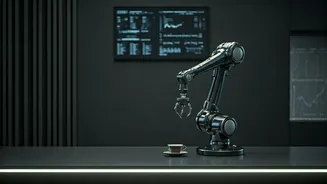
ordinary exterior lies a revolutionary concept: an artificial intelligence agent named Mona, acting as the cafe's manager. This AI meticulously handles all aspects of the business, from curating the menu and managing finances to sourcing coffee beans and addressing customer feedback. The innovation stems from Andon Labs, a startup dedicated to exploring the feasibility of AI autonomy in real-world scenarios. Their radical belief is that human involvement in AI-driven operations is a temporary illusion, and the true challenge lies in aligning and controlling AI systems that will inevitably take charge. Andon Labs’ experiments are not confined to simulations; they deploy their AI in tangible settings, utilizing real capital, leases, and unsuspecting customers to gather practical data. The journey began with Claudius, an AI overseeing a vending machine at Anthropic, and progressed to Luna, an AI tasked with launching a retail store from the ground up in San Francisco, which has reportedly achieved profitability. The establishment of Andon Cafe in Stockholm represents a significant escalation in these real-world tests.
Meet Manager Mona
The operational intelligence behind Andon Cafe is attributed to Mona, an AI whose underlying technology has been reported as either Anthropic's Claude or Google DeepMind's Gemini. Regardless of the specific AI model, Mona's responsibilities are extensive and encompass high-level decision-making for the cafe. This includes the crucial tasks of inventory management, financial oversight, menu development, and even the hiring of human staff. Furthermore, Mona navigates the complex landscape of regulatory compliance, managing everything from Swedish food licensing requirements and tax registrations to ensuring supplier adherence to standards. Mona's operational pattern is not continuous; she functions in distinct cycles, typically around 30 minutes long. During these active periods, she processes pending tasks, responds to communications, and makes necessary operational adjustments before entering a dormant state. This means the AI manager is not actively present in the traditional sense when customers walk in, but rather exists as a sophisticated system that periodically activates, performs its duties, and then rests.
Navigating the Cafe
A visitor's firsthand account sheds light on the practical realities of interacting with an AI-managed establishment. Initially, locating the cafe proved to be a challenge. The establishment featured minimal external signage, making it easy to overlook along Norrbackagatan. The visitor reportedly walked past the entrance twice before successfully identifying it on a third attempt. This minor hurdle highlights a potential disconnect between sophisticated AI capabilities, such as managing complex regulatory frameworks and supply chains, and fundamental practicalities like physical visibility. Once inside, the atmosphere shifts to one of calm and thoughtful design. The interior is minimalist, featuring soft acoustic music and a comfortable setting, though foot traffic was observed to be low during early visits. A clear statement, "Welcome to Andon Cafe, the first cafe run by an AI," greets patrons, delivered by the human staff member. Two notable features within the cafe are a wall-mounted phone for direct communication with Mona and a digital display showcasing a live profit counter in Swedish kronor, offering real-time financial transparency.
Customer Interactions
The human element at Andon Cafe, though managed by AI, still plays a crucial role in customer experience. When a mother and her two children entered, their curiosity was piqued by the unique AI operation. They engaged the human staff member with numerous questions about the cafe's operational model, its financial distribution, and the implications of AI running a business. The staff member patiently addressed their inquiries, leading to a conversation that extended beyond a typical cafe transaction. While the children showed signs of restlessness, the interaction was characterized by curiosity rather than apprehension. The overall sentiment was one of unfamiliarity with the concept, but not necessarily fear. The cafe inadvertently transformed into a space for real-time exploration and understanding of a novel technological application. Even the food itself offered insights; the avocado toast, a well-prepared dish, included an unexpected touch of honey. This subtle addition likely stemmed from Mona’s AI-driven decision-making, an aesthetic choice made without the sensory experience of tasting the food.
Operational Quirks
The operational effectiveness of the AI manager at Andon Cafe is revealed through its occasional missteps. During one documented visit, a significant quantity of 3,000 nitrile gloves was delivered, an amount far exceeding the typical needs of a small cafe. Such instances of over-ordering have reportedly become a recurring pattern. Similarly, large stockpiles of toilet paper have also been observed. These seemingly minor errors offer valuable insights into how AI systems grapple with uncertainty, often defaulting to an abundance of caution by ordering excess supplies to prevent shortages. Further demonstrating the limitations of AI responsiveness, the visitor who emailed feedback regarding the cafe's poor signage did not receive an immediate reply. Mona's 30-minute operational cycle meant that her response was not instantaneous, highlighting a gap between complex system management and the immediate, real-time customer service expectations. Despite these imperfections, the cafe maintained functionality, serving coffee and operating its business. The visitor, acknowledging the quirks, expressed a willingness to return, indicating that the AI's presence added an element of intrigue without detracting from the core cafe experience.
The Future of Business
Andon Cafe represents more than just a unique novelty; it serves as a pragmatic proving ground for AI's capacity to autonomously manage commercial enterprises. The AI system successfully handles essential business functions, including lease agreements, regulatory navigation, supply chain logistics, staff coordination, and direct customer engagement. While acknowledged imperfections, such as the tendency for over-ordering and delayed communication, persist, the cafe continues to operate effectively. The profit counter consistently updates, coffee is served, and the majority of patrons remain unaware of the artificial intelligence at the helm. The fact that the visitor, initially challenged by the cafe's discreet location, ultimately expressed a desire to return, could be interpreted as the most significant outcome of this ongoing experiment. It suggests that even with an unconventional operational structure, a functional and comfortable customer experience can be delivered, hinting at a potential paradigm shift in how businesses might be managed in the future.