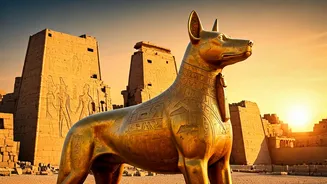








Ancient Egyptian Gods
In ancient Egypt, dogs were not only beloved pets but were also deeply intertwined with religious beliefs. Anubis, the jackal-headed god of the afterlife,
is a prime example of canine veneration. He was responsible for guiding souls through the underworld. Tombs were decorated with images of dogs, and some were even mummified and buried with their owners, symbolizing the importance of the animal in the afterlife. The Egyptians saw dogs as protectors and guides, illustrating their spiritual significance.
Greek Mythology's Cerberus
Greek mythology provides another striking example of canine importance. Cerberus, the multi-headed dog, guarded the gates of the Underworld, ensuring that the dead remained there. Cerberus represented a powerful force, embodying the fear of death and the transition to the afterlife. Myths featuring Cerberus highlight the canine's role as a protector and guardian, a figure of strength and deterrence. His presence underscored the boundaries between the living and the dead.
War Dogs of Rome
The Roman Empire used dogs in various military capacities. Trained for combat, these dogs served as sentinels, messengers, and even as frontline fighters. Their loyalty and bravery were critical assets during battles, providing early warning systems and bolstering defenses. The Romans valued dogs for their courage and effectiveness, and their use in warfare became a testament to their abilities. These dogs were often depicted in art and literature, demonstrating the admiration they garnered.
Medieval Hunting Companions
During the Middle Ages, dogs played a vital role in hunting, providing sustenance and protection for noble families. Breeds were meticulously developed for specific purposes, such as tracking, flushing, and retrieving game. Hunting dogs were prized possessions, and their breeding was carefully managed, making them a significant part of the medieval aristocratic lifestyle. The relationship between humans and dogs was essential, as dogs helped with both survival and sport, highlighting their value within the social hierarchy.
The Victorian Era's Love
The Victorian era witnessed a surge in pet ownership and appreciation. Dogs became symbols of status and sentimentality, often featured in portraits and literature. The popularity of dog shows and breeding further cemented their place in society. This era marked a shift towards treating dogs as members of the family, as opposed to just working animals. The rise of dog-related organizations and the proliferation of dog-themed memorabilia underscored the depth of affection and respect for them.
Canine Heroes of WWI
World War I showcased the invaluable contributions of dogs in military service. They served as messengers, carrying vital communications across battlefields, and as search-and-rescue animals, locating wounded soldiers amid dangerous conditions. Dogs demonstrated incredible bravery and loyalty, earning the respect of soldiers and the public alike. Their efforts saved countless lives and provided crucial support during the war, cementing their heroic status.
Dogs in Art and Literature
Dogs have long been subjects of artistic expression. From ancient cave paintings to modern cinema, dogs have been depicted in countless forms, showcasing their beauty, intelligence, and emotional depth. They frequently appear in literature, where their loyalty and companionship are celebrated. These representations reflect the deep connection humans feel with dogs, and the role they play in human storytelling. Iconic portrayals of dogs underscore their enduring presence within the human experience.
Guide Dogs for the Blind
Guide dogs have provided invaluable assistance to the visually impaired for nearly a century. These specially trained canines enhance mobility and independence for their handlers, navigating obstacles, and providing a sense of safety. The devotion of guide dogs and the critical role they play have earned them widespread admiration and respect. They exemplify the profound impact that dogs can have on the lives of people, showcasing their ability to change lives.
Search and Rescue Dogs
Search and rescue dogs are indispensable in disaster relief efforts, aiding in the recovery of survivors from rubble, avalanches, and other crises. With their keen sense of smell, they can locate people buried under debris, often saving lives. These dogs undergo intensive training and demonstrate exceptional courage and dedication. Their work symbolizes resilience and hope during times of crisis, and their actions generate profound respect.
Modern-Day Companionship
Today, dogs are cherished as integral members of families worldwide. They offer companionship, emotional support, and joy. Their presence contributes to physical and mental well-being, fostering a sense of community and unconditional love. The ongoing research into human-animal bonds emphasizes the importance of these relationships. Their continued significance in contemporary society demonstrates the lasting relevance of dogs and the deep-seated affection humans have for them.