







Webb's Molten Discovery
The James Webb Space Telescope (JWST) has identified a hidden atmosphere on the super-Earth TOI-561 b. This discovery is particularly significant because
TOI-561 b is extremely hot. The exoplanet's intense heat conditions make the presence of an atmosphere unexpected. This finding has generated interest among astronomers, as it challenges current theories about how atmospheres can form and persist in extreme environments. Further research using the JWST will likely focus on the atmosphere's composition and how it manages to survive under harsh conditions.
Close Space Encounter
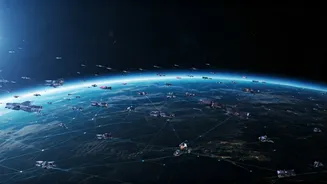
A Chinese spacecraft narrowly avoided a collision with a Starlink satellite, as reported by SpaceX. This near miss highlights the growing problem of space debris and the increasing risk of collisions in Earth's orbit. The situation underscores the need for better space traffic management and coordination among different spacefaring nations and private companies. Experts are calling for more stringent regulations and the development of technologies to track and remove space debris to reduce the chances of future accidents and protect the infrastructure already present in space.
Clocks on Mars
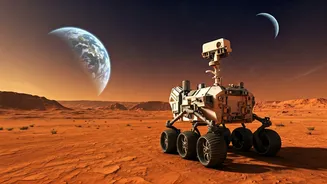
A recent study suggests that clocks on Mars run faster compared to Earth. This difference is due to the varying gravitational forces between the two planets. The study implies that time on Mars, when observed from an Earth-centric perspective, advances slightly quicker than time here on Earth. This variance, though small, is crucial for future missions. Precise timekeeping is vital for navigation, communication, and scientific experiments. Thus, understanding and adjusting for this time difference is essential for ensuring the accuracy and success of Martian explorations.
Battery Breakthroughs
A significant advancement in battery technology has been achieved through a carbon-titanium breakthrough which enhances lithium-sulfur battery performance. These batteries are regarded as promising alternatives to current lithium-ion batteries. The carbon-titanium innovation improves the energy density and the overall durability. These improvements could lead to longer-lasting batteries and a reduction in the use of rare earth materials. This development is especially important in the context of increasing demand for electric vehicles and renewable energy storage. Enhanced battery capabilities play a significant role in reducing environmental impact.
Camera Design Advances
Technological advancements are being made in camera design, with specific focus on innovations within the Vivo X300 series. These advances prioritize excellence in camera performance through both hardware and software integration. The Vivo X300 series aims to provide optimal image clarity and versatility across many shooting scenarios. Improvements in areas such as low-light photography, zoom capabilities, and video stabilization are crucial. These advancements not only enhance user experience but also push the boundaries of mobile photography, delivering professional-grade image quality in a portable device.